A Floor, not a Future
On settlement, dignity, and ordinary life after mobilisation

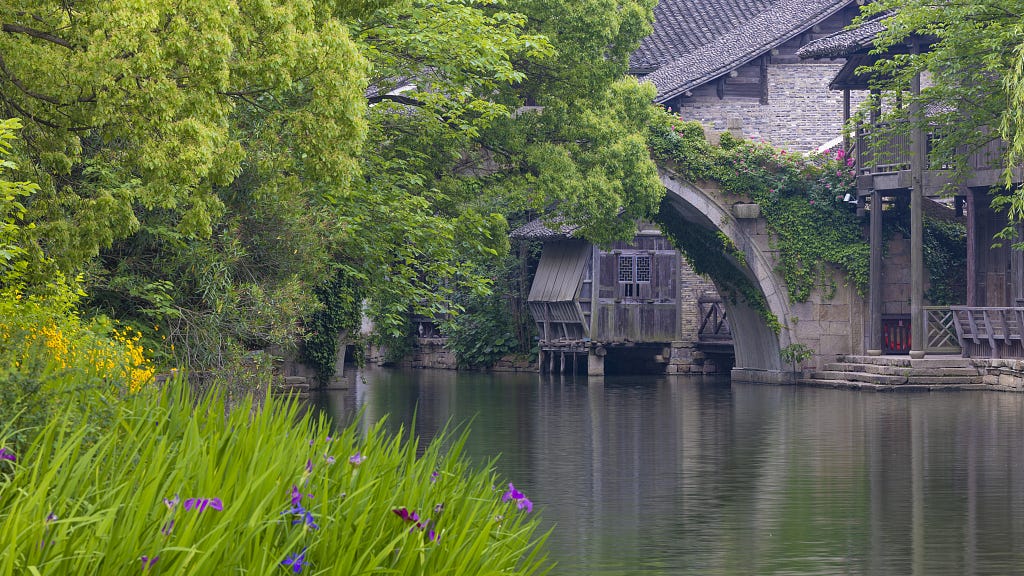
Give us back the seasons.
A settlement is what you build when you stop promising people a grand arc, and start protecting their ability to live an ordinary life without humiliation.
For a long time, modern states asked people to live as if they were part of a project. The project had many names—nation-building, growth, progress, productivity—but the feeling was similar: you were being enrolled. You were being mobilised. You were being asked to keep up, keep learning, keep performing, keep justifying your place in the machine.
Most people do not spend their days thinking about Progress with a capital P. They are not trying to “make History.” They are trying to get dinner on the table, keep the marriage intact, keep the parents alive, keep the kid steady, keep the body working. They are tired. They want to get on with getting on.
When a society can no longer credibly promise that the project will pay off—when the future stops clearing—mobilisation begins to feel less like uplift and more like harassment. The demands remain, but the meaning leaks out. What used to be bearable becomes intrusive.
That is when settlement matters.
By settlement I do not mean a theory of justice. I mean something simpler and more ancient: the ability to end arguments, to cancel obligations, to finish disputes, to move on. A society can survive without hope. It cannot survive without closure. When nothing can be settled—when every friction becomes a moral drama, every failure becomes an explainer, every policy becomes a referendum on identity—people do not become enlightened. They become exhausted. And exhaustion is not politically neutral. It curdles.
Closure without integrity becomes arbitrariness; it is only humane when rules can be trusted not to be a hunting ground for the connected.
A floor is not abundance. A floor is the decision that certain humiliations are unacceptable even when resources are tight.
You can see this in the strange way contemporary anger often presents itself: not as a coherent ideology, but as a revolt against being tested. Ordinary life has been turned into a continuous exam of comprehension. You chose the wrong plan. You filled the wrong form. You misunderstood the rule. You failed to advocate for yourself. Survival becomes conditional on fluency.
When existence becomes a cognitive task, resentment does not rise against wealth alone. It rises against those who seem to benefit from complexity, those who speak the language of systems, those who insist that misunderstanding is a moral fault. “Cognitive elites” becomes a crude label for a real experience: being governed through demands you cannot meet.
This is why “efficiency” is the wrong word for what people are actually asking for. What they want is dignity-preserving administrability: a life that does not require insider knowledge, permanent vigilance, or interpretive strain just to remain intact.
This is not a plea to defeat complexity. Complexity is inevitable. What matters is where it lives. A decent society absorbs complexity upward; into institutions, interfaces, and boring closure; so ordinary people are not forced to treat existence as an interpretive profession.
A settlement is how you give people that life.
This is not a theory of the best society. It is a proposal for the minimum terms that prevent exhaustion from turning predatory.
Some will reply with a familiar line: you may not be interested in X, but X is interested in you. X could be AI, or Crypto, or China, or Climate, or any of the large systems that now intrude into every household. This is true. But it does not invalidate settlement. It makes settlement necessary. The point is not to deny the intrusion. The point is to prevent intrusion from becoming total capture—to stop the external from reorganising our entire interior life.
A civilisation is not a combat unit. It must be able to metabolise threat without turning daily life into permanent readiness.
So what does a modern settlement look like?
It does not begin with lofty ideals. It begins with the basics—what the Chinese would call 衣食住行: clothing, food, housing, mobility. The ordinary scaffolding of life. In a small, tightly coupled city, these are not sentimental topics. They are infrastructure. They are whether life is possible without constant panic.
To those four, any serious settlement today adds healthcare and energy. Not because these are fashionable policy domains, but because they are the hidden load-bearing layers beneath everything else. Without healthcare, pain becomes destiny. Without energy, every other promise becomes decorative.
But the mistake is to think the settlement is simply a list of services. The deeper question is the moral design of access: do you have to become a predator, a supplicant, or a genius to pass through the gates?
A settlement worth having has two parts.
First, a material floor—things a decent society does not allow to collapse:
Food and basic material security.
No one should be left scrambling for the physiological minimum.
Housing that is attainable without humiliation.
Not everyone gets their dream home. But no one should be forced into permanent instability, or made to feel stupid for not knowing how the system works.
Mobility and access.
People must be able to move through the city—to work, care, community—without the system turning into a daily endurance test.
Healthcare—and especially pain management.
A society that cannot treat pain will metastasise cruelty. Pain is not a character flaw. It is not a private moral lesson. It is a public problem with public consequences.
Energy reliability.
Because everything else depends on it quietly: health, water, food, cooling, communications, safety. A society that cannot keep the lights on cannot keep its promises.
Second, dignity conditions—how the floor is delivered, and what the system refuses to demand of people:
Survival must not depend on gaming the system.
No one should need insider edge-cases, consultants, loopholes, or social cunning to secure a decent life. A society that makes gaming necessary trains predation into its citizens. It converts anxiety into a way of life.
In Singapore terms, you can see this wherever parents try to turn education into an optimisation sport—an arms race of knowledge about exceptions and “special pathways.” In America, you see it in healthcare: networks, billing codes, pre-authorisations, appeals. Different theatre, same injury: survival becomes conditional on system-hacking.
Institutions must not be organised around contempt.
Discipline is not the same as humiliation. A country can be strict without being cruel. When frontline systems treat ordinary people as obstacles, when every request is met with suspicion or scolding, dignity collapses. People will accept constraint; they will not accept contempt forever.
Family is protected as infrastructure, not treated as a hobby.
Caregiving must remain possible. Intergenerational ties must remain viable. A society that quietly punishes family obligations—through time scarcity, cost structures, or constant mobility churn—will eventually discover that it has no replacement for what it has destroyed.
Give people back time—give them back the seasons.
A life that is permanently optimised is not a life. People need recoverable time, rhythm, quiet, and room to heal. A society that cannot return time to people will eventually make them hate it, no matter how sophisticated its economy becomes.
After illness, this becomes obvious. Productivity stops sounding like a virtue and starts sounding like a threat: a demand that has forgotten the body.
Existence is not conditional on usefulness.
You do not have to justify being alive by being productive, impressive, or employable. When a society makes usefulness the condition of continuance, it becomes sadistic. It turns the weak into shame, the tired into waste, and the unlucky into moral failures. It may still function as an economy. It will not hold as a civilisation.
These clauses are not utopian. They are not a promise that everyone will flourish. They are a promise that ordinary life will remain possible without turning people into bureaucratic athletes, optimisation projects, or permanent defendants.
This is also where the question of “character” belongs, but we should be careful with the word because it can become a sermon. The point is not moral purity. The point is system integrity. A settlement requires a shared belief that the rules are not merely a hunting ground for the clever and well-connected. It requires that obvious predators can be removed, not celebrated. It requires that public responsibility is treated as duty, not as loot.
When that integrity fails, everything else becomes theatre. People stop believing that terms are real. They begin to treat the system as an enemy to be exploited. Society becomes a game, and the prize goes to those most willing to cheat.
This is why “closure” is not a technical preference. It is a civilisational necessity. You can survive disagreement about ideals. What you cannot survive for long is a breakdown in what counts—what counts as ownership, as injury, as proof, as responsibility. When those stop being shared, the society does not become plural. It becomes un-settleable. And when nothing can be settled, everything becomes story, and the loudest story wins.
In China there is a word for a particular sickness of modern life: involution—the feeling of running harder inside a closed arena, with no release, no widening of possibility, only more competition for the same space. The point is not that this is uniquely Chinese. It is that optimisation without exit produces exhaustion, not excellence. If you keep raising the bar without improving the lived floor, you don’t get greatness. You get burnout and quiet rage.
A settlement is how you prevent a society from turning its people into that kind of creature.
It is not a grand moral constitution. It is not a substitute religion for Progress. It is an agreement that the basic terms of life will remain administrable, that the gates will not demand predation, and that the system will reserve zones where market logic and machine logic are not allowed to become total.
If you cannot keep those promises, it does not matter how clever your technology is. You will still get backlash, carnival, and cruelty—because the ordinary person will eventually refuse a life that feels like permanent mobilisation.
The goal is not to defeat history. The goal is simpler: to make a life that is not organised around fear, humiliation, and constant proving.
To give people back time.
To give them back the seasons.
I took a break from writing and went to do some work in the garden. I almost felt guilty because I need to make money, I need to earn enough to at least pay taxes, the government doesn’t give me any leeway because I’m super-frugal, independent, healthy...
I saw your new essay and listened to it while considering the next task in the garden. I’ll multitask, so I wouldn't feel guilty...
I noticed young gladioli sprouts peeking through thick, high grass. I haven’t weeded their bed in since last year! I thought about other plants and all the work that seemed more urgent. I must first take care of the food. That’s the priority, isn’t it?
Still, I couldn’t help myself. I squatted down and pulled the matted grass with my bare hands until the gladioli were free.
As I listened to your essay and heard you mention “clothing, food, housing, mobility”, I thought to myself, “What about flowers?”
Their fragile, fragrant magnificence commands humility and humanity. They will intrude into my rush when they start to blossom, commanding attention. They will ask: “Where is your love right now? Why do you care? If we're not enough for you, what is?”
Gladioli agreed with you. Yes ...
- a society that makes usefulness the condition of continuance will become sadistic,
- caregiving must remain possible,
- people need their time back, they need their seasons just as flowers do.
The ordinary people that you write about suddenly were these “useless” flowers. Could that be all these people would need to be: gentle, kind, and beautiful?
I nodded to myself.
I settled with my own character, with my ethics, my integrity.
I took in what the gladioli just told me in their commentary to this essay, I gazed to the right: “Ah, the lilies!”
I smiled at the thick grass covering the garden bed and remembered the Chinese proverb that stuck with me many years ago: “When you have only two pennies left in the world, buy a loaf of bread with one, and a lily with the other.”
Maybe because I'm an American, filled with our particular myths, I find this particular post to be overly pessimistic. I had not read your analysis of machine intelligence to date as prescribing resignation in response. Resistance is futile?