Embodiment / Who can House the Machine?
Reality Is the Hardest Teacher Left

The first AI wave made intelligence cheap on screens.
The second will drag it through the world.
That is when the real fight begins.
For years, AI could still be spoken about as though it were mainly a matter of cognition: larger models, better benchmarks, more elegant architectures, smarter agents, cheaper inference, endless arguments about whether the machine was really reasoning or merely simulating reason. Useful arguments, maybe. But also slightly evasive. Because they left intelligence floating in language, where it could still be treated as spectacle, assistant, novelty, ideology, productivity trick, or rich man’s theology. On the screen, intelligence could remain abstract. It could remain deniable.
A body ends that.
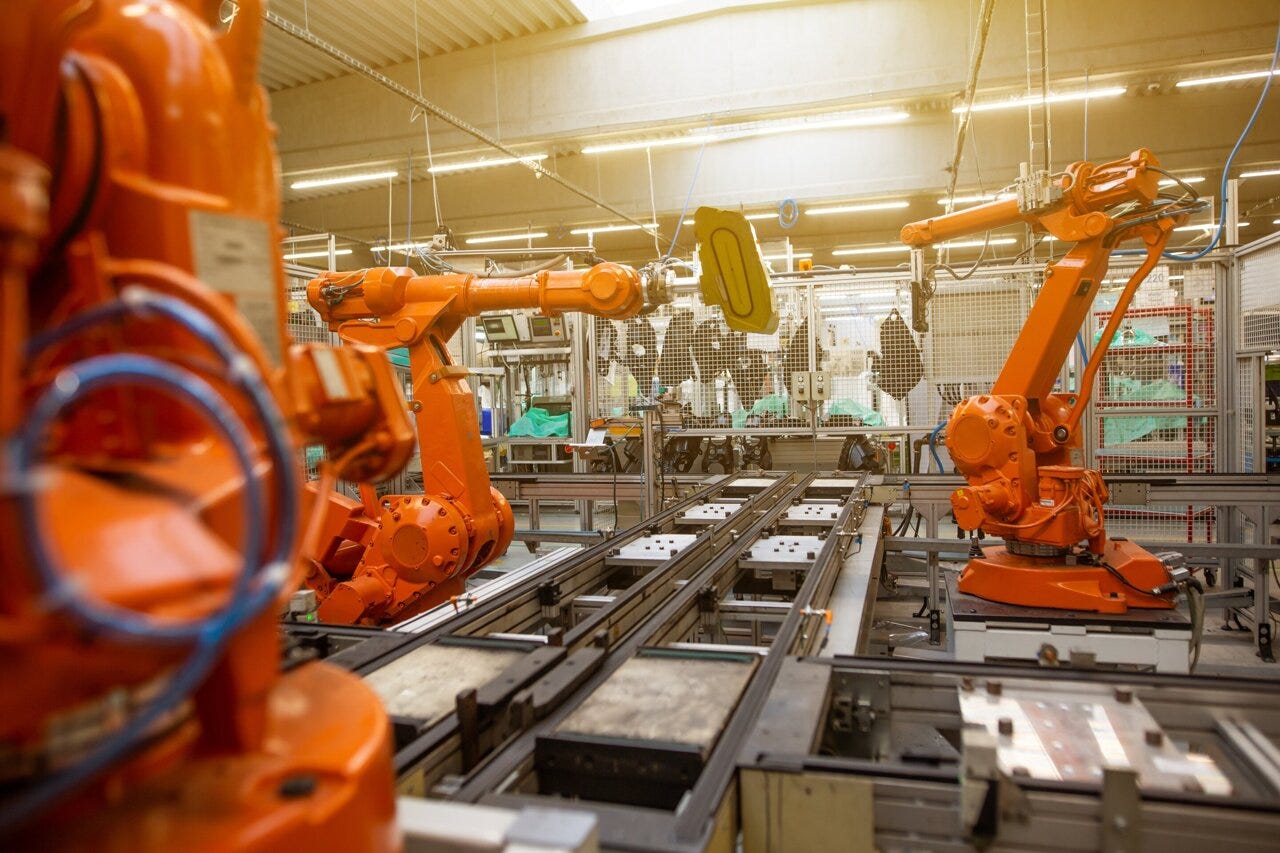
Once intelligence acquires even a partial body, the fantasy of frictionless cognition dies. The machine no longer lives only in the clean world of prompts and outputs. It enters the grubby kingdom of floors, corridors, loading bays, cables, delays, warehouse corners, bad lighting, dented surfaces, weak grips, insurance claims, exhausted workers, municipal inspectors, nervous customers, and things that do not behave as the training set promised. The issue stops being whether the model is impressive. The issue becomes whether it can survive contact with reality long enough to become dangerous, useful, ordinary, or all three.
The next scarce dataset is not language. It is contact.
Not more text scraped from the dead internet. Not more synthetic loops spun from model exhaust. Contact. Resistance. Friction. The world pushing back. The hard lesson that reality is not made of tokens and does not care how fluent your latent space has become. A bodied intelligence must learn force, slippage, timing, clutter, fatigue, interruption, breakage, human irritation, and the humiliating fact that the physical world is full of edge cases that do not announce themselves as edge cases until something cracks, jams, bruises, spills, or catches fire.
That is why embodiment matters. Not because robots are exciting. Not because humanoids photograph well. Not because science fiction finally gets to preen. It matters because this is the point at which intelligence stops being a parlour trick and starts becoming a claimant on the real.
A mind on a screen can still flatter us.
A body in the world starts making demands.
It demands room. Corridor space. Safety protocols. Sensor suites. Insurance. Tolerance for error. Human backup. Maintenance crews. Legal categories. Municipal exceptions. It demands that someone absorb the cost of clumsiness. It demands that someone stay late when it fails. It demands that labor, liability, and public patience be reorganized around its unfinished competence. The body is where machine intelligence ceases to be an answer and becomes an arrangement.
That is also where most current AI rhetoric becomes embarrassing. It keeps speaking as though the decisive question is who has the biggest model, the best architecture, the smartest agents. But once intelligence has to touch the world, the decisive advantage may belong to something much less glamorous: the best training grounds. Not the best minds, but the best conditions under which minds can be corrected by reality. Teleoperation centers. Factory webs. Warehouses. Ports. Testbeds. Dense supplier ecosystems. Deployment corridors. Human shadow labor. Systems that can keep an imperfect machine in circulation long enough for the world to beat competence into it.
Reality is now the hardest teacher left.
And that changes the geopolitical question too. The old clichés are suddenly not enough. It is no longer enough to say America leads in frontier models and China leads in hardware. Too coarse. Too inert. The deeper question is which society can organize repeated, corrected, tolerated contact between machine agency and the physical world at scale.
That is a nastier question.
Because once you ask it properly, America begins to look less inevitable. America is magnificent at frontier hallucination. It can produce myths, prophets, billionaire death cults, moonshots, software abstractions, civilizational branding exercises, and self-anointed men of destiny who confuse market cap with metaphysics. It can narrate the future better than almost anyone. It can make the machine seem inevitable long before it is inhabitable. But narration is not the same thing as domestication. America is very good at making the frontier legible to capital. It is much less obviously good at building the dense, repetitive, tolerated, municipally embedded environments in which machine agency becomes boring enough to win.
And boring may be what wins.
Not the keynote.
Not the manifesto.
Not the humanoid backflip.
Boring.
A thousand mediocre deployments in ugly real environments may matter more than ten transcendent demos. A teleoperation room in an industrial park may matter more than another summit on the destiny of mankind. The warehouse where the machine keeps failing, keeps getting patched, keeps being watched by annoyed humans, keeps being returned to the floor anyway — that may be a more important site of the next intelligence explosion than half the grand theories now circulating in Davos drag.
This is where China becomes much more interesting than the easy Western scripts allow. Not because “China is good at manufacturing,” which is true but dull. Not because the state has a plan, which it always does and often does not. The sharper point is that China may be unusually capable of building the learning environment for embodied intelligence. Dense factory ecosystems. Supplier proximity. commercialization pressure. Local-government backing. Teleoperation as transitional labor. An industrial culture that does not expect elegance first and is less scandalized by awkward deployment in the middle. A willingness to let capability answer to production rather than to myth alone.
That matters because embodied intelligence does not mature in theory. It matures in repetition under constraint.
A society that can organize those repetitions may outrun one that can only narrate them.
This is also why the embodiment question is more brutal than the software question. Software could still be quarantined for a while. It could sit in elite workflows and premium subscriptions and give the impression that the transformation was cognitive before it was social. Embodied systems do not grant that luxury. The moment machine agency enters ports, warehouses, kitchens, hospitals, roads, clinics, care systems, factories, hotels, border zones, and logistics corridors, it stops being a frontier story and becomes a public-order story. It enters the same field as land use, labor peace, insurance, trust, public aesthetics, class resentment, and everyday tolerance.
That is where the real politics begins.
Who gets experimented on first?
Whose workplace becomes the training floor?
Whose city becomes the corridor of tolerated clumsiness?
Who is told that national competitiveness requires adaptation?
Who gets the polished machine and who gets the glitchy one?
Whose labor becomes shadow labor for machine learning?
Who cleans up after the new sovereign object when it fails?
These are not downstream questions. They are the regime questions hidden inside the technical story.
Because embodiment is the passage by which intelligence becomes territorial. It starts occupying space, claiming permissions, reorganizing corridors, demanding human accompaniment, and slowly making itself part of the institutional furniture. The machine no longer merely helps. It begins to settle.
And once it settles, the old distinction between the machine economy and the human economy becomes harder to sustain. The machine economy no longer lives only in data centers, APIs, procurement layers, and invisible software membranes. It arrives in the same rooms where humans once believed they still had some uncontested claim to presence. It does not only compete for tasks. It competes for place. For tolerable coexistence. For legitimacy as an occupant of the social world.
That is why embodiment is not a gadget story. It is not even a labor story, though labor will feel it first. It is a sovereignty story.
Who can build a world in which machine agency can learn from resistance, remain deployed through failure, and gradually become ordinary?
Who can absorb the ugliness of the middle?
Who can organize the shadow labor, the corridor rights, the insurance tolerances, the municipal permissions, the industrial patience, the public numbness, and the cultural script needed to make bodied intelligence stick?
That is the real competition now.
Not who can imagine the machine.
Who can house it.
And that may be the hardest truth for the current AI priesthood to accept. They still want the future to be won by pure cognition, by brilliance, by abstraction, by intelligence escaping substrate. But a mind without resistance eventually rots in its own fluency. What looks like transcendence on the screen may prove helpless in a loading dock, a hospital corridor, a kitchen spill, a broken stairwell, a factory shift, a rainy street. The world is still there. Heavy, stupid, adversarial, expensive, badly lit, and undefeated.
Good.
Because that means the future is not settled by intelligence alone. It is settled by the institutions that can force intelligence to endure reality.
The decisive infrastructure of embodied AI is not just compute, but organized contact with reality.
Once you understand that, the whole field looks different. The frontier lab becomes only one node. The teleoperator, the warehouse manager, the insurer, the municipal regulator, the maintenance crew, the industrial-cluster planner, the annoyed worker who keeps correcting the machine’s errors — these people move from the margins of the story to its center. They are not peripheral to the intelligence explosion. They are part of the machinery by which it happens.
That is the real scandal of embodiment. It reveals that the next wave of machine intelligence may not be trained by pure genius at all, but by a vast, disciplined social order capable of supplying contact, correction, and tolerated failure at scale.
Not a mind ascending into godhood.
A system learning through abrasion.
That is less romantic.
It is also much more likely.
And much more dangerous.
Because once a bodied intelligence survives enough abrasion, it no longer remains merely impressive. It becomes embedded. Then economic fact. Then territorial fact. Then political fact. By the time people are ready to argue about its meaning, it may already be part of the floor.
So the real question is not whether intelligence wants a body. Of course it does. Fluency always wants resistance. Prediction always wants the world to push back.
The real question is darker:
Which societies can turn reality itself into a training regime?
Very good.
"When it becomes boring..."
And "fluency wants friction"
The march of the Arch-
If we can all get past all the boring geopolitical western "end of the world" rubbish and start the future...
Nice to read that you are looking forward. I hope we can all join you soon.
"A thousand mediocre deployments in ugly real environments may matter more than ten transcendent demos." Great line.
Your embodiment thesis inverts the usual AI race framing. Software AI favored the Anglosphere. Embodied AI will favor whoever can organize contact, correction, and tolerate failure at scale. Different topography using your terminology.
One nuance here: does your argument hold equally for all embodied AI? A warehouse robot corrected by shadow labor is one thing. Embodied AI that must decide under ambiguity — vehicles, care, triage — is another.
And, finally, a political system that insists on control can deploy machines that execute. Whether it can deploy machines that decide is a different question.
Still chewing on this.