Empire Mind
Di Dongsheng, Singapore, and the temptation of China-maxxing


愚公移山 but I don’t remember who drew it
I had the uncomfortable experience of listening to Di Dongsheng / 翟东升 and recognising not his politics, exactly, but his grammar: pipes before speeches, balance sheets before values, leverage before sentiment. Empire did not appear in his world as flag, anthem, colony, or map. It appeared as settlement, debt, market access, data, sanctions, industrial chains, welfare capacity, technological diffusion, installed base, and strategic patience. The shock was not agreement. It was recognition. Good lord, I thought. Sometimes I sound like one of these Chinese strategists.
The recognition was not a fall from innocence. I was never innocent, not in that way. I come from Singapore, which is not the soft island mind of diplomatic imagination. Singapore is a miniature empire without the comforting scale of empire: a city-state that learned to run visibility, routing, law, finance, housing, logistics, education, labour, borders, queues, and anxiety as one civic operating system. It survived by becoming useful, legible, hard to bypass, allergic to disorder, and very good at turning human mess into process. Singapore did not teach me that values float above pipes. It taught me that values require pipes, that sentiment without throughput becomes theatre, and that mercy often arrives as a system that works before anyone has to beg.
So perhaps Yuanbao (one of the LLMs that mirrors Chinese chatteratis) is right. I am not an island mind seduced by empire mind. Singapore was never island innocence. Singapore was empire mind miniaturised and disciplined by proximity. It taught me to read exposure before intention, incentives before speeches, process before sentiment, and systems before romance. But Singapore’s empire mind is trapped by size. The human keeps returning. The flat returns. The hospital bill returns. The queue returns. The parent, patient, worker, student, migrant, old person, and small trader return. The island may think in systems, but the system is always interrupted by faces.
Di’s empire mind is freer because it is larger. It does not have to pause at every face. It can treat welfare as demand support, youth income as social ballast, area studies as data strategy, AI as installed base, and the middle zone of the world as cashflow, training environment, and geopolitical room. I understand why this attracts me. It lets thought breathe at altitude. It releases the mind from the endless civic obligation to process the human consequence before the system has finished thinking. That release is not innocence. It may not even be wisdom. It is relief.
This may be my version of China-maxxing. Not the vulgar kind: not flag-waving, not civilisational cosplay, not the teenage intoxication of discovering that China is large and full of people. Something more dangerous because it is more intelligent. China-maxxing, for me, is the temptation to let Chinese scale correct the crampedness of Singaporean thought; to let the factory civilisation, the continental state, the old bureaucratic memory, the new AI operators, the industrial body, and the appetite for world-system editing enlarge what had become too careful in me. It is not loyalty. It is not conversion. It is the feeling that one has been thinking in a room with a low ceiling and has suddenly heard men discussing the load-bearing walls of the world.
The stack does not build itself
A few years ago, I wrote about the planetary stack. The stack was Benjamin Bratton’s term, but I made it my own: the layered architecture of computation, governance, territory, cloud, city, address, interface, and user that now constitutes the planet’s operating system. I thought I was describing something beyond empire. The stack was not a state, not a market, not a civilisation, not a flag. It was a condition: thick, uneven, multi-scalar, too distributed for sovereignty to command and too infrastructural for ideology to explain.
I was not wrong about the stack. The stack exists. But I was naive about what builds it. The stack does not emerge because humanity becomes networked enough to transcend power. It is funded, powered, defended, priced, routed, sanctioned, standardised, and installed. It has cables, currencies, ports, chips, platforms, grids, courts, militaries, insurers, clouds, labour regimes, data centres, and ideological weather. I had described the architecture. I had not fully faced the appetite required to build it.
Empire mind enters there. Empire mind is not simply imperial nostalgia or conquest fantasy. It is the mind that looks at the stack and asks who owns the pipes, who pays for the reservoir, who controls the settlement layer, who subsidises the model, who absorbs the unemployed, who sets the standard, who can sanction, who can route around whom, and who is left holding the valuation when the story breaks. Planetary mind sees the stack as a condition. Protocol mind sees the cracks between stacks as a site of escape. Empire mind sees the stack as a prize.
I used to think the stack was post-imperial. I was wrong. The stack is what empire becomes when territorial conquest is no longer sufficient. The British Empire built ports, telegraph cables, trading houses, legal forms, and the maritime map of command. The American empire built dollar settlement, the internet, the platform economy, the global security architecture, the alliance system, and the financial-legal atmosphere through which so much of the world still moves. The Chinese empire mind is not building empire in the British or American sense. It is trying to build the next layer of the stack: industrial AI, payment corridors, commodity anchors, cheap models, data capture, supply-chain editing, green-energy scale, and the political economy of installed base.
“Chinese Empire” is the wrong phrase if it makes us imagine colonies, flags, governors, and gunboats. Chinese empire mind is stranger. It comes from a civilisational-state that remembers hierarchy, humiliation, centrality, bureaucracy, tributary imagination, revolutionary discipline, manufacturing depth, and developmental improvisation. It does not need to reproduce British maritime empire or American liberal empire. It can think in corridors, industrial clusters, standards, cheap tools, sovereign data, commodity settlement, ports, models, educational flows, payment rails, and the quiet conversion of usefulness into dependency.
Empires do not disappear into the stack. They become the stack. That does not mean every stack is centrally planned or every layer is commanded by a state. The American stack was built by firms, universities, militaries, lawyers, capital markets, standards bodies, venture capitalists, intelligence agencies, and consumers who rarely thought of themselves as imperial. That is precisely the point. The most successful empire does not always look like empire to those who live inside it. It looks like infrastructure, opportunity, convenience, security, liquidity, common sense, and the future.
Di’s empire mind
Di matters because he sees this. He does not treat American power as a sermon about values. He treats it as a balance sheet with guns, myths, courts, platforms, and settlement privileges. He is more empire-minded than many Western technology thinkers because he does not stop at the firm, the startup ecosystem, the welfare settlement, or the entrepreneurial society. Nicolas Colin can diagnose the crisis of European institutions, digital firms, and the social contract. Di asks a colder question: what parts of the world-system can a rising industrial civilisation retain, reprice, cheapen, route around, or inherit?
His work is useful because it is not merely triumphalist. It is strategic political economy with teeth. He thinks about money, sanctions, parallel systems, AI, welfare, industrial chains, the American fiscal machine, and the world outside China and America as one connected battlefield. He does not ask only whether China can innovate. He asks whether China can prevent the next migration of the production centre. He does not ask only whether AI is powerful. He asks where AI is embedded, whose data it learns from, who pays for it, what market it captures, and whether it can make Chinese industrial civilisation harder to dislodge.
This is why his AI writing is more revealing than the usual model race. He contrasts the American search for a general model that wakes, generalises, scales, and becomes godlike with China’s more practical AI+ path: intelligence embedded in roads, mines, ports, factories, hospitals, hotels, construction sites, battlefields, and administrative systems. The American imagination seeks transcendence, the model that becomes oracle, demon, saviour, final mind. The Chinese imagination, in Di’s account, is more like the 老师傅: the experienced master-worker who knows the site, improves the process, reduces cost, and becomes part of the operating body.
This modesty is deceptive. Embedded intelligence becomes installed base. Installed base becomes data. Data becomes iteration. Iteration becomes dependency. Dependency becomes strategic depth. Chinese AI does not have to win every benchmark if it becomes cheap enough, useful enough, open enough, and locally adapted enough to enter the workflows of countries outside the American premium stack. Just as Chinese manufacturing gave the world a price revolution in goods, Chinese AI can attempt a price revolution in intelligence.
And there, there is the fox. Not “AI for humanity.” Not “responsible innovation.” Not the clean language of safety or ethics. Price, data, cashflow, subsidy, diplomacy, open source, installed base, middle-zone capture. The frontier model is not just a model. It is a wedge into the world’s workflows. The world outside China and America is not merely audience, partner, or Global South. It is data, demand, cashflow, legitimacy, training environment, and future dependency.
But Di does not stop at productivity. He knows that models carry gods inside the plumbing. Language models carry values. Image models carry aesthetics. Video models carry narrative. Whoever controls the models, data, algorithms, compute, and deployment environments does not merely sell tools. He shapes what people consider plausible, beautiful, normal, legitimate, admirable, backward, efficient, risky, or real. God returns through pipework.
That is why the old God, Gun, Pipework schema (another unpublished essay in my vault) becomes useful here, but only if kept close to the ground. The West fears the machine as god: consciousness, alignment, doom, salvation, soul, agency, apocalypse. America arms the machine as gun: software attached to capital, defence, procurement, intelligence, sanctions, border control, political access, and private command. China embeds the machine as pipework: ports, mines, factories, logistics, hospitals, classrooms, payment rails, public administration, cheap models, and local systems that become more intelligent because they are used.
Di is thinking about all three, but from the pipework side. He understands that pipework is not innocent. Once intelligence is embedded, it does not merely relieve work. It governs attention, standards, language, taste, trust, and dependency. It changes what the user can imagine, what the institution can see, what the state can price, and what the system can refuse.
The protocol archipelago
There is another mind I still understand and still love: protocol mind. Venkat has it. The summer of protocols and adjacent to it some awkward cousins like the free republic, the network state, the archipelago of voluntary association and cryptographic coordination. It is a beautiful mind because it sees the space between giants and refuses to accept that the future must be built only by them. It imagines islands of consent, code, shared norms, exit, federation, local sovereignty, and technical coordination in the cracks of the great stacks.
I am tender about protocol mind. It sees something real. The cracks matter. The islands matter. New associations do emerge in the spaces between empires. Free cities, research communities, crypto networks, AI collectives, small laboratories, epistemic republics, diaspora circuits, private rooms, and strange forms of voluntary coordination can preserve possibility when large systems become stupid or coercive. Protocol mind keeps alive the intuition that not everything must be commanded from above.
But protocol mind is smaller than empire. That is not an insult. It is a condition. The protocol island can host a community, a project, a currency, a school, a standard, an escape route, a temporary republic. It cannot by itself clear global payments, secure commodities, power data centres, absorb labour shocks, build ports, insure shipping, defend supply chains, or survive sanctions at civilisational scale. It can route around the giant only if someone else maintains enough of the terrain through which the route passes.
This was the lesson I did not want to learn. Planetary mind gave me architecture. Protocol mind gave me exit. Empire mind gave me machinery. It asked the questions the other two often softened: who funds the layer, who defends it, who clears it, who powers it, who trains on it, who subsidises it, who sanctions it, who inherits it, who gets routed through it, and who cannot leave?
The protocol archipelago is real. It is worth building. But it exists inside the weather of empires. The space between the American stack and the Chinese stack is not empty freedom. It is a pressured zone of smaller stacks, regional stacks, sectoral stacks, corporate stacks, protocol islands, and opportunistic corridors. Cloud meets land in the gray shatter zones of Southeast Asia. The future may be negotiated there, but the weight of the future will still be shaped by the giants that can build, power, price, defend, and install.

The appetite in the room
Once I heard Di clearly, I understood why certain rooms had begun to feel different even before I had language for it. The appetite was already there. Not the old appetite of wounded nationalism, not the stiff theatre of official confidence, not the diaspora hunger to be recognised by the West. Something else: a calmer operational appetite among Chinese and China-adjacent people who no longer seemed to be asking permission from the old centre.
They were not all officials. They did not need to be. Some carried labs. Some carried capital routes. Some carried model knowledge. Some carried industrial memory. Some carried introductions, warmth, humour, technical competence, and the ease of people who know that China is no longer merely catching up. They were not empire in uniform. They were empire mind becoming social, portable, and room-capable.
This is the part that startled me more than the theory. Books can sound imperial because books have no bodies. Rooms are different. In rooms, appetite appears as laughter, speed, curiosity, introductions, appetite for tools, comfort with scale, impatience with Western permission, and a kind of brotherly warmth that makes the structure easier to miss. Empire does not always arrive as command. Sometimes it arrives as competence, price, friendship, and installation.
Di did not create the recognition. He explained it. He gave grammar to an appetite I had already begun to see: Chinese strength moving through operators, not only through ministries; through usefulness, not only through command; through models, labs, capital, supply-chain memory, and industrial confidence, not only through flags. The Chinese operator after strength is not simply cadre, tycoon, dissident, founder, overseas merchant, or nationalist uncle. He may be technical, mobile, warm, ambitious, capital-aware, institutionally bilingual, and state-adjacent without being simply state-owned. He carries something more useful than a flag: access to Chinese capacity.
AI makes this figure lighter. Older Chinese outwardness required large firms, factories, loans, ports, platforms, construction firms, SOEs, or state-to-state agreements. AI lets smaller teams carry operating capacity: models, workflows, diagnostics, robotics, sector templates, finance wrappers, data strategies, deployment knowledge, and Chinese price discipline. It allows Chinese capacity to enter foreign institutions not first as ideology, but as solution. That is why usefulness is the new danger. Coercion announces itself. Usefulness enters smiling.
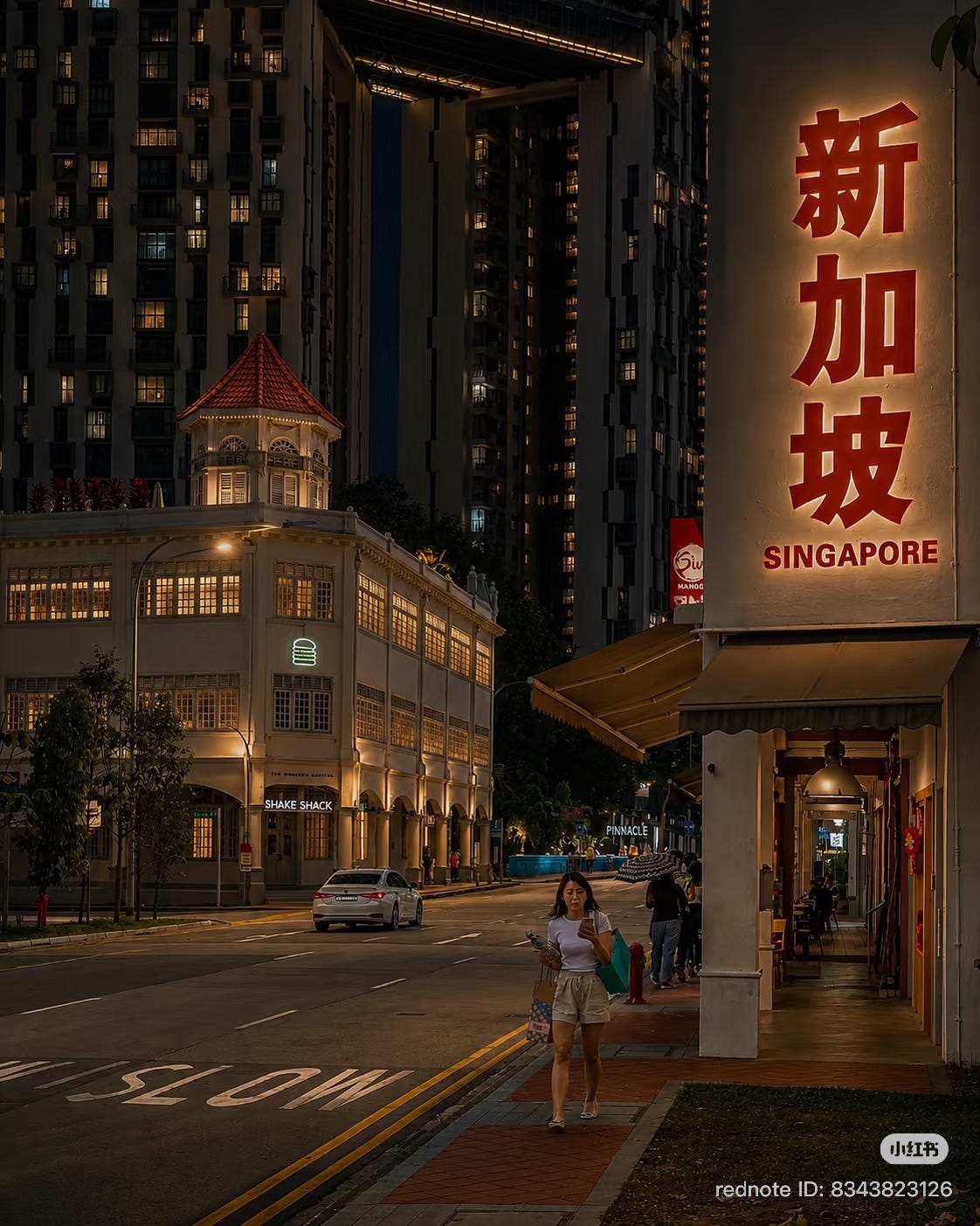
Singapore as miniature empire
I should admit the part I do not fully trust. I like empire mind because it is not constantly asking permission from the human scale. It does not stop at the tired person, the anxious parent, the patient at the claims counter, the small trader buried under forms, the old person locked out by a password loop. It can see them, but it sees them as population, demand, labour, risk, training data, welfare burden, legitimacy pressure, or consumption base. It does not have to kneel beside each one.
Singapore taught me not to kneel either, but it taught me to process the human efficiently. That is different. Singapore’s strategic inhumanity is not cruelty. It is clarity under constraint: the face becomes a case, the complaint becomes a ticket, the household becomes a balance sheet, the citizen becomes a queue, the foreign worker becomes a dormitory allocation, the family becomes a housing demand signal, the old person becomes a care burden, the child becomes future human capital. The machine is often humane-looking because it works. It can be clean, safe, responsive, incorruptible, and quietly exhausting at the same time.
This is why Singapore cannot be described as mere island mind. Island mind, in the sentimental version, suggests innocence, smallness, softness, caution, and the human scale. Singapore is not that. Singapore is protocol mind weaponised and empire mind miniaturised. It runs visibility, routing, finance, law, identity, logistics, education, housing, labour, and risk as one compact stack. It proves that one does not need vast territory to think imperially. One needs visibility, discipline, intolerance of mess, and the administrative talent to make coercion look like convenience.
But Singapore also cannot escape proximity. The human returns too quickly. The caseworker hears the voice. The minister sees the queue. The estate has neighbours. The complaint circulates. The flat is someone’s marriage, inheritance, resentment, fertility decision, and delayed adulthood. The hospital bill becomes family panic. The school place becomes class formation. The lift breakdown becomes old-age fear. Singapore can turn the human into a system object, but the object remains near enough to interrupt the system.
That is the difference between Singaporean empire mind and Di’s empire mind. Singapore’s version is miniaturised by necessity. It must constantly convert strategy into civic manageability. It must make abstraction tolerable at close range. Di’s version operates at civilisational distance. It can treat welfare as demand support, not compassion; youth income as social ballast, not moral repair; area studies as data strategy, not cultural humility; AI deployment as installed base, not assistance; the Global South as market, data, legitimacy, and bypass route. It can treat the human as condition for system continuity without pretending to begin from tenderness.
That is why it builds. That is also why it frightens. The human slows thought down, and sometimes thought needs scale. But if thought never returns to the human, it becomes administration without mercy. The ledger becomes clean because the losses have been moved to another column. Empire mind does not have to take the human into account; that is its power. It eventually must, or that power becomes a machine for making people smaller.
This is where Di’s welfare arguments complicate the fox. He is not a bloodless accountant. His “future starting income” idea, his concern with young people, demand, anti-involution, and the social ballast required for an AI-industrial civilisation show that empire mind can return to the human through system maintenance. But that return is still not island tenderness. It is not the human as neighbour, patient, parent, lover, child, or old person. It is the human as condition for civilisational durability. That difference matters.
Post-Singapore
Perhaps I am post-Singapore now. Not because I have left or rejected it, and not because I have become more Chinese in any simple political sense. I am post-Singapore because I no longer think primarily from the position of the small, even though the small trained me. The island’s discipline — caution, exposure management, calibration, survival between giants, refusal of theatrical courage — is not contemptible. It is real. It kept me from thinking like an idiot. But it is no longer sufficient.
The island mind, or rather the Singaporean mini-empire mind, is a survival mind. It asks how to avoid being crushed, how to remain useful, how to stay legible, how to keep the pipes working, how to avoid becoming a battlefield, and how to process the human consequence without letting it paralyse the system. Empire mind asks a larger and colder question: what can be built, repriced, routed around, installed, inherited, and made durable? It does not ask permission. It asks where the valve is.
I have moved from the first question toward the second. That is not a fall from innocence. I was never innocent. It is a recognition that the game is larger than the island, and that the island’s survival was always contingent on forces it could not control. Empire mind is the attempt to think at the scale of those forces.
This is why China-maxxing is the tempting name for it. Not because China has become morally sufficient, or because Beijing has become beautiful, or because Chinese power solves the human question. It does not. The temptation is that China supplies scale where Singapore supplies discipline. China supplies industrial body, demographic memory, civilisational depth, state appetite, AI deployment, manufacturing patience, and a world large enough for empire mind to stretch. It gives the mind room after the island has trained it too well.
The danger is that room can feel like liberation when it is also distortion. To move from Singapore to China in the mind is not to move from innocence to realism. It is to move from compressed empire mind to expanded empire mind; from civic throughput to civilisational installation; from processing the human nearby to modelling the human at scale. It is enlargement, yes. But not every enlargement is liberation.
Did I degrade?
I do not know whether I degraded. That is the honest answer. A few years ago, I might have said empire mind was smaller than planetary mind: too interested in power, leverage, price, and control. Now I am less sure. The planetary stack does not build itself. Protocol islands do not clear payments, secure commodities, power data centres, host industrial AI, absorb labour shocks, defend supply chains, or survive sanctions by declaring themselves sovereign. Somebody has to fund, route, defend, install, and govern the machinery.
Singapore taught me that much already. But Singapore taught it at civic scale, where the human remained close enough to interrupt the system. Di teaches it at civilisational scale, where the human can become a variable inside the ledger. That is the part I do not fully trust in myself. I like the altitude. I like the relief from the face. I like the way empire mind lets power become visible without apologising for every consequence.
Perhaps this is maturation. Perhaps it is seduction. The honest answer is that I do not know. Empire mind is clarifying because it refuses innocence. It is corrupting because it can make the refusal of innocence feel like permission. It sees the pipes beneath the sermon, but it can also forget why the pipes exist. It sees demand, data, labour, cashflow, leverage, and installed base before it sees persons. It can make the refusal of sentiment feel like seriousness.
What remains, if anything, is not island innocence. I never had that. What remains is the memory of proximity: the knowledge that every stack eventually reaches a body, every queue has a face, every efficiency has a residue, and every system that refuses the human for too long becomes a machine for making people smaller.
That is the part of me that has not fully surrendered. I still believe the better AI question is not whether the machine is conscious, but what a civilisation wants intelligence to relieve. A civilisation reveals itself there: not in its slogans, not even in its fears, but in the burden it most wants lifted from ordinary life.
A good infrastructure reduces cognitive load. The tap works without a lecture on hydrology. The train arrives without a seminar on signalling. The parcel moves without requiring the sender to understand customs routing. The complaint is received without forcing the resident to identify the correct agency. The patient gets help without becoming a claims lawyer. The old person is not humiliated by a password-recovery loop. The child is not punished because the family failed to master a portal.
Civilisation begins where existence stops being a cognitive task. AI can deepen that mercy, or reverse it. It can absorb complexity upward into systems that close problems quietly, or it can push complexity downward onto individuals, forcing ordinary people to interpret, appeal, prove, compare, contest, optimise, and blame themselves inside rules they did not write.
Empire mind can build the stack that makes cognitive mercy possible. Singaporean mini-empire mind remembers, however imperfectly, why cognitive mercy matters at close range. Protocol mind preserves pockets where different bargains can still be tried. None of these minds is sufficient alone. Planetary mind without empire mind becomes architecture without machinery. Protocol mind without empire mind becomes island fantasy. Empire mind without proximity becomes power without faces.
This does not mean every strategic thought must pause before the human. That would be unbearable. Sometimes the mind must rise above the human scale to see the system at all. But the return must happen. If it never returns, intelligence becomes only another pressure system. It may be cheap, embedded, useful, and everywhere; it may still make life smaller.
I recognised the fox
I recognised Di because I have become more like him than I expected. That was the shock. But perhaps the deeper shock is that Singapore had prepared me for him. I was not innocent before empire mind arrived. I had already lived inside a small, clean, efficient version of strategic inhumanity: not cruelty, not brutality, but clarity disciplined into systems, faces converted into cases, mercy delivered through throughput.
Di enlarges that grammar. He takes what Singapore miniaturised and moves it to civilisational scale: AI as installed base, welfare as ballast, data as world-reading, currency as remote control, industry as retained body, and the middle zone of the world as the next surface of installation. I understand the attraction. At that altitude, the human no longer interrupts every thought. The stack becomes visible. The machinery becomes buildable. The world becomes legible as flow.
The task is not to pretend I do not like that. I do. The task is to ask what the liking costs. What does the stack relieve? Whom does it make smaller? Which burdens does intelligence remove, and which burdens does it merely push downward? Which protocol islands remain worth building inside the gravity wells of empires? Which appetite builds, and which appetite has begun to consume the person who carries it?
A mind that refuses the accounting because it sounds predatory will be governed by those who do not refuse it. But a mind that learns only accounting will eventually be accounted for.
P.S. thanks for making it this far. No clean resolution I’m afraid. Deepseek read this and called me a hot mess. Yuanbao called me bourgeoises sentimental. Coincidentally this morning Venkat wrote that reading me is less like following an essay than walking through “CP National Park”: trails everywhere, creatures arguing in the undergrowth, live fires, sudden weather.
After spending 15 days in China (Shanghai and Chengdu) after an absence of 18 years, while my body was entranced and absorbed in its physical environment and my soul nourished by friends old and new, my mind was… discombobulated, questioning a lot about what I thought I knew about empire, autarkey, networking, and scale. The way I can see myself in your journey and descriptions… freaky! I’ll chalk it down to being Singaporean too and with an adjacency to the institutions we are both familiar with.
So I think you're both misscoping and underestimating the protocol world reductively as the decentralized blockchainy periphery and network-statey larps. Much of what you're attributing to empire is actually protocol. Empire proper presumes emperors, and the history of the last 1000 years is the steady decline and retreat of both. Vast empires broke up at the tail end of the colonial era, and emperors slowly retreated as the rule of law constrained them more and more.
Trump may be called a "bad emperor" but his authority pales in comparison to what imperial power actually looked like pre the era of revolutions 1848 etc. He wields more absolute power by virtue of there being more absolute power to wield, thanks to technology, but in relative terms, he has much less share of available power.
Xi might have more relative power than Trump, but his power too pales in comparison to historic emperors I think. And analyzed properly, both late-stage US and early-stage China "empires" are much more protocolish than their formal structures suggest. Even Trump's America has to chafe against the reluctance of NATO and other alliance problems to say "how high" when he says "jump."
The rules based international order was clearly protocolish, and even though Mark Carney may have declared it dead, it's actually pretty alive and load-bearing. I think the right way to analyze things is to view protocolishness as an embodied quality, not as a "type of guy" meme inventory. It's not a protocol because it checks off a list of items like formal decentralization, use of encryption etc. Or to look at it another way, Farrell and Newman called American an _underground_ empire, not a plain one. The fact that it had to wield power and influence stealthily rather than overtly already indicates the degree to which the "message of the medium" of protocolish infrastructures like payment networks or the internet reshapes the will-to-power of hegemons individual and state. Ditto China's BRI.
Understood that way, "protocol" is actually a post-end-of-history permaweird state that is both natural and inevitable because the technological environment simply does not allow as much control and autocratic governance as it used to. And protocols are not necessarily archipelagic. That's just the easy to understand archetypes. Protocols end up mirroring natural topographies, and represent some sort of minimal distortion of that by coercive power. What you're calling "empire" I think can be modeled as a "coercive power surplus" -- what can China or the US make their spheres of influence do that is not natural to the topography of that sphere of influence? Do they enjoy some sort of centralization premium?
Protocols, understood in their full-scope way are not precious little marginal larps, but the ascending planetarity. Obscured by imperial larps that are thin theatrical fictions modeled on nostalgic reactionary sentiment rather than real power. Russia and the US have already learned that in Ukraine and Iran. China will learn that too, soon enough.