Participation Without Power
When Showing Up Stops Changing Anything

For a long time, participation was treated as a moral good.
You showed up.
You spoke.
You signed.
You voted, commented, attended, convened.
Even when outcomes were thin, participation was said to matter. It was how citizens stayed engaged, how communities formed, how legitimacy renewed itself. Participation was not power, perhaps, but it was proximity to it. A way of remaining inside the story.
That belief did not collapse all at once. It thinned.
By the late 2010s, participation increasingly failed to move outcomes. By the early 2020s, many people knew this. By the late 2020s, participation continued anyway.
This persistence deserves attention.
Participation did not survive because it worked.
It survived because it felt safer than acknowledging impotence.
To stop participating was not neutral. It carried meaning. Silence risked being read as apathy, ingratitude, withdrawal, extremism, or moral failure. Participation, even when hollow, offered cover. It signalled seriousness. It kept one leg inside the room.
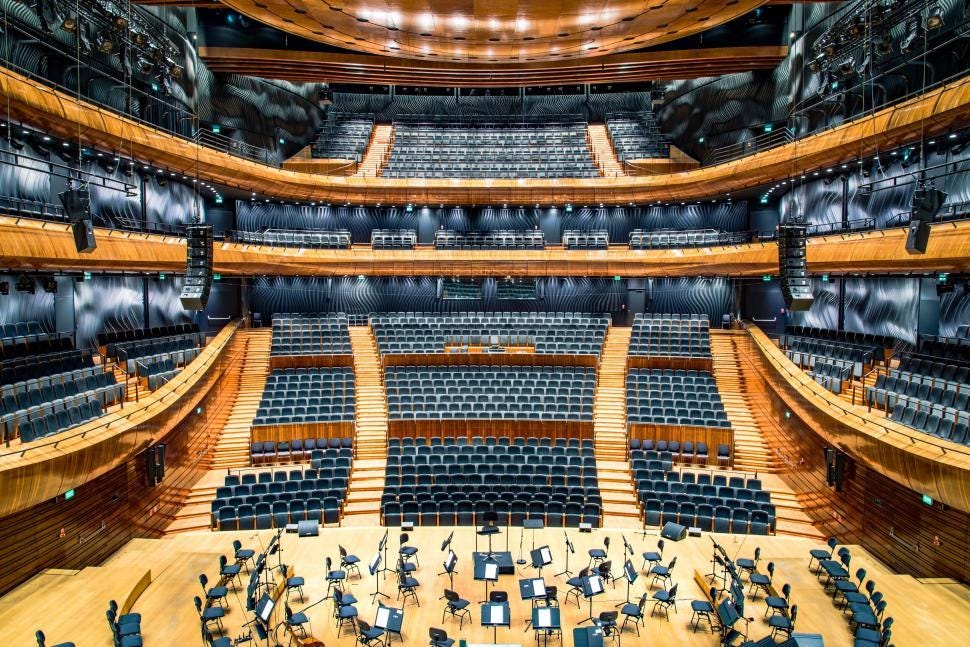
And so rooms filled.
Committees convened whose decisions were advisory by design.
Deliberative exercises proliferated whose outputs were already bounded.
Collectives assembled books, statements, frameworks, toolkits — earnest artefacts circulating among people who already agreed on their significance.
None of this was fraudulent in the narrow sense.
It was worse than that.
It was sincere activity in spaces where causality had already drained away.
Participation became a way to metabolise frustration without forcing confrontation with the limits of influence. It absorbed surplus concern. It redistributed anxiety horizontally rather than vertically. It allowed people to remain visible to one another while power remained elsewhere.
This was not imposed from above.
It was chosen.
Participation culture persisted longest among those who could afford its irrelevance — people whose material security, reputational capital, or institutional insulation meant that nothing decisive hinged on outcomes. For them, participation was low-risk and high-signal. It demonstrated care without demanding consequence.
But the form did not remain confined to elites. It diffused.
Non-elites were told that participation was empowerment. That voice mattered. That presence counted. When outcomes failed to change, the explanation was never structural exhaustion. It was insufficient engagement. More participation was prescribed as the remedy for participation’s failure.
This produced a quiet inversion.
Participation ceased to be a means of applying pressure and became a test of moral adequacy. Those who withdrew were asked to explain themselves. Those who stayed were never required to justify why staying made sense.
Over time, this created a strange consensus: everyone could feel dissatisfied, but no one could leave without cost.
By the late 2020s, participation had become a form of mutual hostage-taking. Everyone continued to show up so no one would have to be the first to say that the room no longer mattered.
This is why participation felt compulsory even as belief evaporated.
Not because people were fooled.
Because non-participation threatened identity.
To stop participating was to admit something unbearable: that one’s intelligence, care, and effort were no longer legible to the system one had oriented around. Participation concealed that recognition. Silence exposed it.
So people spoke.
They spoke into channels that returned acknowledgement but not leverage. They refined processes whose outcomes were already priced in. They debated marginal adjustments to structures that were not in a phase of adjustment at all, but maintenance.
This was not hypocrisy in the classical sense. Hypocrisy requires belief in what one pretends. What emerged instead was insistence — the insistence that participation still mattered, even after belief had thinned beyond plausibility.
The most revealing feature of late participation culture was not optimism, but fear. Fear of being the one who stopped pretending. Fear of standing outside without an alternative story. Fear of discovering that withdrawal, once chosen, could not be narrated as virtue.
Participation was not empowerment.
It was insulation.
It insulated people from the social visibility of having nothing to offer that would be taken up. It insulated institutions from confronting their own unresponsiveness. It insulated discourse from the harder question: not how to include more voices, but where decisions were still being made at all.
Eventually, some people learned something else.
They learned to recognise when participation no longer changed the distribution of force. This recognition mattered most in places where power still took responsibility for outcomes, rather than outsourcing that responsibility to process. Where decisions were real, participation could still matter. Where decisions had already been deferred or dissolved, participation became friction.
They learned to distinguish seriousness from ceremony. They learned that attention itself was a finite resource, and that offering it freely to non-causal spaces was not civic virtue but metabolic leakage.
They did not announce their withdrawal.
They did not moralise it.
They simply stopped showing up.
This was not apathy.
It was judgment.
And it marked a quiet shift: participation ceased to be the default moral posture of a functioning society, and became one option among others — increasingly chosen by those who needed its signals more than its effects.
What followed was not silence everywhere. It was selectivity.
People became careful about where they spoke, and why. They learned that not every invitation was neutral. That not every forum deserved presence. That sometimes the most accurate response to non-power was not louder participation, but absence.
This was not celebrated. It was barely named.
But it changed the texture of public life.
Participation did not disappear.
It lost its innocence.
And once innocence was gone, the question was no longer how to get more people involved — but who still knew the difference between showing up and mattering.
Very helpful re-framing on participation. Urges me to consider where my participation might have an impact vs virtue signalling.
The momentum of the gargantuan economic and political machinery leaves us with little choice. Participation—on the machine’s terms—is mandatory.
I’ve always been part of the alternative, battling for the life and the beauty of the Earth, for community and a Zen-like, radically simple and sublime purpose. I began as a clicktivist, then turned into a proper activist. I advocated for genuine humanness, I’ve been barefoot in 45 countries, I wrote books, I inspired change… I participated.
And yet, 30 years later, the change seems minuscule within the greater scheme of what really matters. What matters is impenetrable to naive idealism from the margins. The machinery has to grind on, as Chor Pharn would put it, “the mesh behaves less like an economy and more like a metabolic system. A system that never stops circulating because it cannot stop without breaking something essential.”
Yet, I do have an impact. We do have an impact. But it is only on the surface. We’re like the microbiome in the human body. We augment (or obstruct) metabolic processes, but the structure remains outside our reach. We’re essential, but we’re replaceable.
When meaningful shifts take place, business-as-usual hijacks and integrates them into the mesh. Reading Aguera y Arcas “What is Intelligence?” deepens my sense of interconnectedness of every single intelligence on the planet, from the tiniest virus to the Internet. It’s all one intelligence, one computational organism, one life. That’s frightening, yet also consoling.
I stand with many who withdrew and are admired by thousands who see our withdrawal as a virtue. It’s not apathy, it’s judgment, indeed.
With social media, we can not only be visible, we can be influencers—especially given our withdrawal that so many people romanticise.
We don’t matter where it matters, that’s true, but we’re content with our absence from the level of decision-making that we can’t affect, anyway. We digest and compost, and that’s alright.
I live on the margin of society, a 21st-century transcendentalist hippie beatnik philosopher. I’m satisfied where I am. Leaving didn’t come with a cost that would strike me in a significant way.
There are millions out there who live similarly. We stand as proof that there’s room for different reflexes and reactions.
Non-participation does not only not threaten our identity, it also embellishes our authenticity.
I believe the mesh needs our kind of (relatively) non-participatory stance. What’s more, I believe it should be carefully preserved on all continents, in all cultures, urban, rural, wild, not only in the case of the remotest tribes. I see this as a part of the redundancy, which is an essential ingredient for the transition to Type-1 civilisation.
We can hold the mesh accountable and down-to-earth amidst the rising cynicism. The mesh can’t survive without its microbiome, and the microbiome can’t survive without its host. This primal symbiosis shouldn’t be forgotten.
As I sit in my tiny hermitage, thus digesting Chor Pharn’s wise words, Erno Paasilinna’s words come to mind: “There are no hermits, thinking is also participating.”