Read This First (updated 31 December 2025)
On infrastructure, endurance, and the limits of ideas

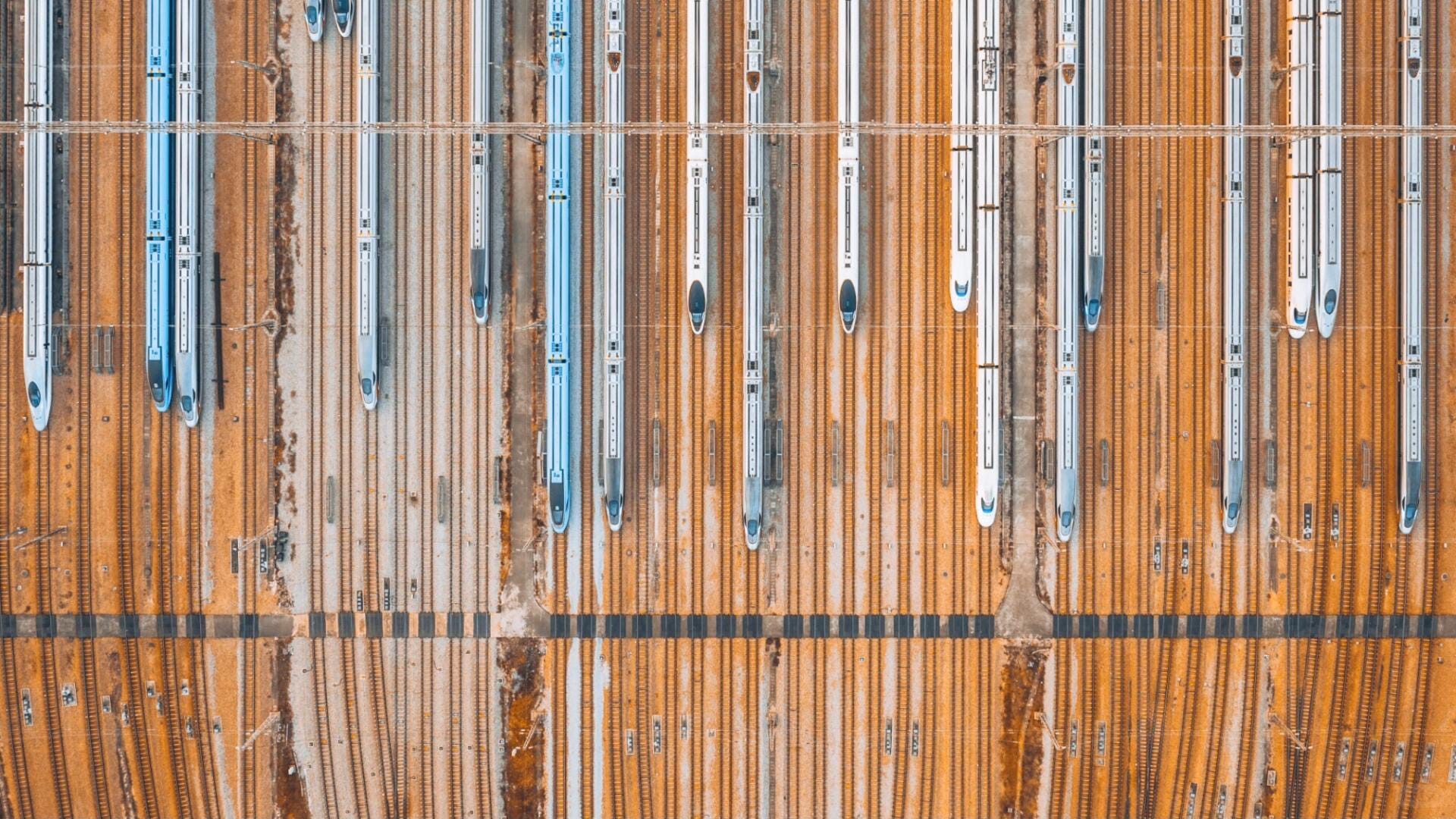
This is a body of work about metabolism rather than ideas.
It begins from a simple observation: many of the forces now shaping collective life no longer respond reliably to belief, persuasion, or design. Energy systems do not bend to intention. Supply chains do not care about legitimacy. Demography moves slowly, finance moves fast, and infrastructure absorbs error until it no longer can.
Much contemporary writing still assumes that the future will be decided by better arguments, better governance, or better technology. This Substack takes a different starting point. It treats civilisation as a throughput problem before it is a political one: energy in, materials transformed, waste managed, continuity maintained. When those flows are coherent, societies can argue about meaning. When they are not, meaning itself becomes unstable.
That condition — constraint without collapse, abundance without ease — is the terrain this work inhabits.
The essays collected here read the world through coupled systems rather than single causes. Energy, compute, capital, demography, logistics, standards, and mood are treated not as separate domains but as interlocking layers. Shifts that appear ideological on the surface are often metabolic underneath. What looks like political failure is frequently infrastructural mismatch. What feels like cultural exhaustion is often a throughput problem experienced at the human level.
This lens draws attention away from familiar narratives. It is less interested in rise and decline than in how different societies organise continuity under pressure. It pays particular attention to middle powers, where constraint is felt early and adaptation is explicit. It treats grids, ports, fabs, payment rails, and standards as forms of governance rather than technical detail.
Asia appears frequently in this work because many of the systems under strain are already being assembled there. Electro-states, dense industrial ecologies, energy corridors, and logistics hubs are not abstractions in this context; they are operating environments. The question is not whether they are admirable, but whether they function.
None of this is utopian. This is not a vision of a perfected world, nor a programme to be implemented. It assumes that growth is increasingly bounded, that shocks are normal rather than exceptional, and that the central task of governance in the coming decades will be maintenance rather than expansion. The problem is no longer how to accelerate history, but how to keep systems legible, livable, and coherent as they slow.
If you are looking for predictions or manifestos, you will not find them here. What you will find are attempts to name constraints accurately, to follow power where it actually moves, and to understand why some arrangements endure while others exhaust themselves even when animated by good intentions.
How to read
This is not a linear argument. It is closer to a map than a narrative.
You can enter anywhere. Essays are written to stand alone, but they are connected by recurring questions and shared vocabulary. If you read long enough, patterns will emerge.
A useful rule of thumb is to follow the pipes. Wherever you land, ask: where is the energy coming from, which corridor carries it, whose ledger records it, and what breaks when it is stressed?
If you prefer structure, there are loose pathways through the work: essays on energy and industrial systems; pieces on finance as infrastructure; analyses of AI and intelligence under physical constraint; dialogues and letters where the argument is interrupted or tested. These are guides, not requirements.
This is a random-access body of work. Read it the way you would wander a city rather than complete a course.
What this is not
This Substack is not a brand, a platform, or a community-building exercise. It is not an attempt to build consensus or rally belief. It does not presume that clarity produces agreement.
It is also not a closed system. Some arguments sharpen over time; others remain provisional. The aim is not closure, but fidelity to the terrain as it changes.
The book
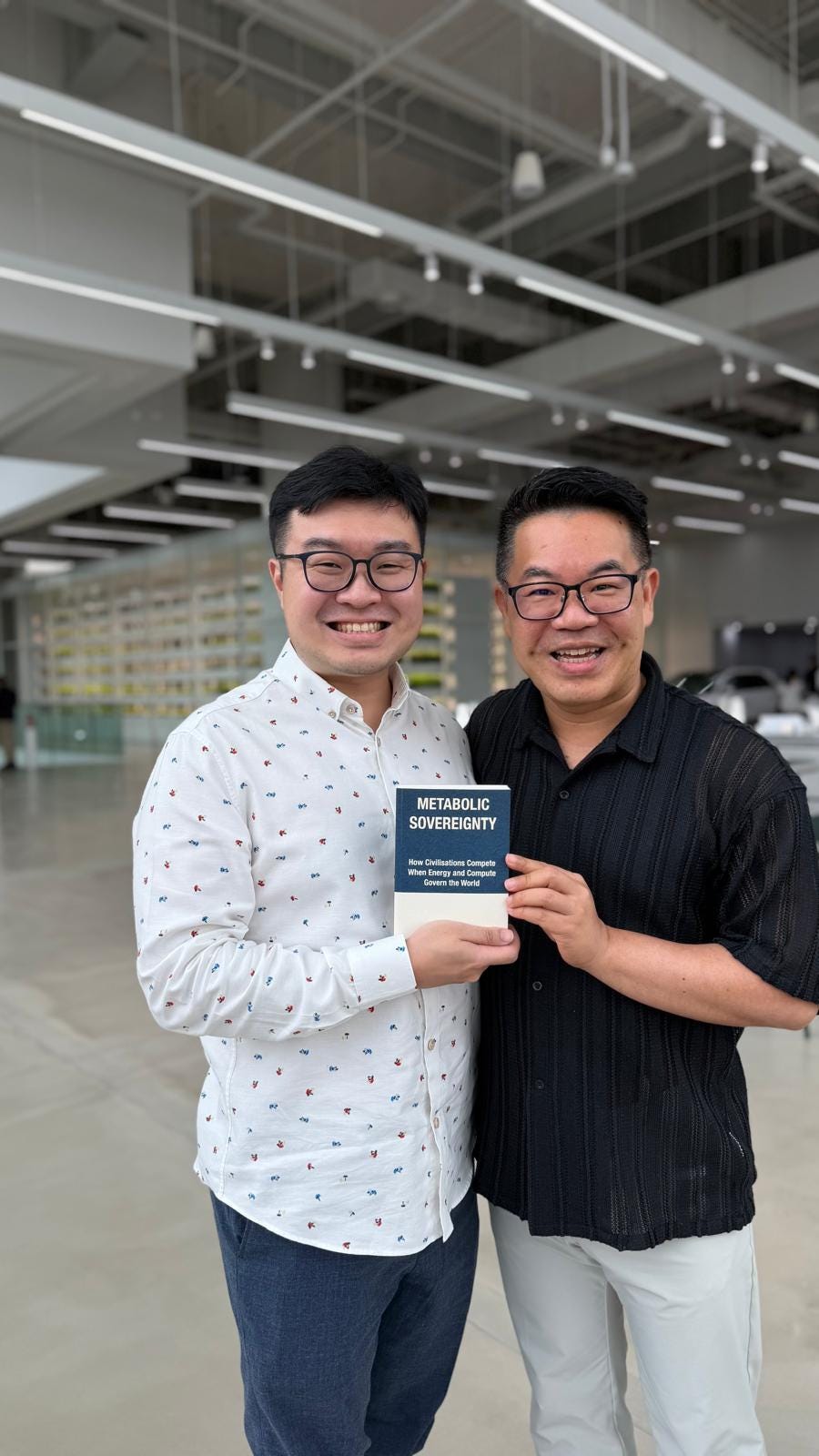
A short book, Metabolic Sovereignty, is attached here as a PDF.

It gathers a quieter line of work that has run through this Substack. Not the most popular pieces, but some of the more consequential ones — essays concerned with infrastructure rather than events, constraint rather than preference, endurance rather than momentum. Read individually, they describe conditions. Taken together, they describe a system.
The book exists because this material could no longer remain scattered. Bringing it into one place makes visible what was previously implicit: that we are living through a civilisational transition defined less by ideology than by metabolism.
It is written for my father, as a Christmas present. There may be other books in the future. But this one is complete, and for now, it stands.
I am printing a small number of physical copies and sharing them selectively. The PDF is here for those who wish to read it.
A final note
Everything here assumes time rather than immediacy. These essays are not written to travel far or fast. Some may read differently years from now, when today’s improvisations have hardened into structure, or failed.
If you are reading this in the future — perhaps on paper, perhaps rescued from a dead cloud — the world you inherit may already resemble the one these pieces were trying to describe: half-built, half-strained, still operational. Take what illuminates. Ignore what does not.
You can start anywhere.
Thank you I've downloaded the book. What you point out here makes sense to me. The closing down of industrial civilization will be chaotic at the very least. Some record of this disfunction as it happens will be useful especially for those of us who are sensing some ripples in the force that binds it all.
Alas, the book download button is giving me this error message: This XML file does not appear to have any style information associated with it. The document tree is shown below.