The Elite Human–Machine Stratum
Power that builds without governing

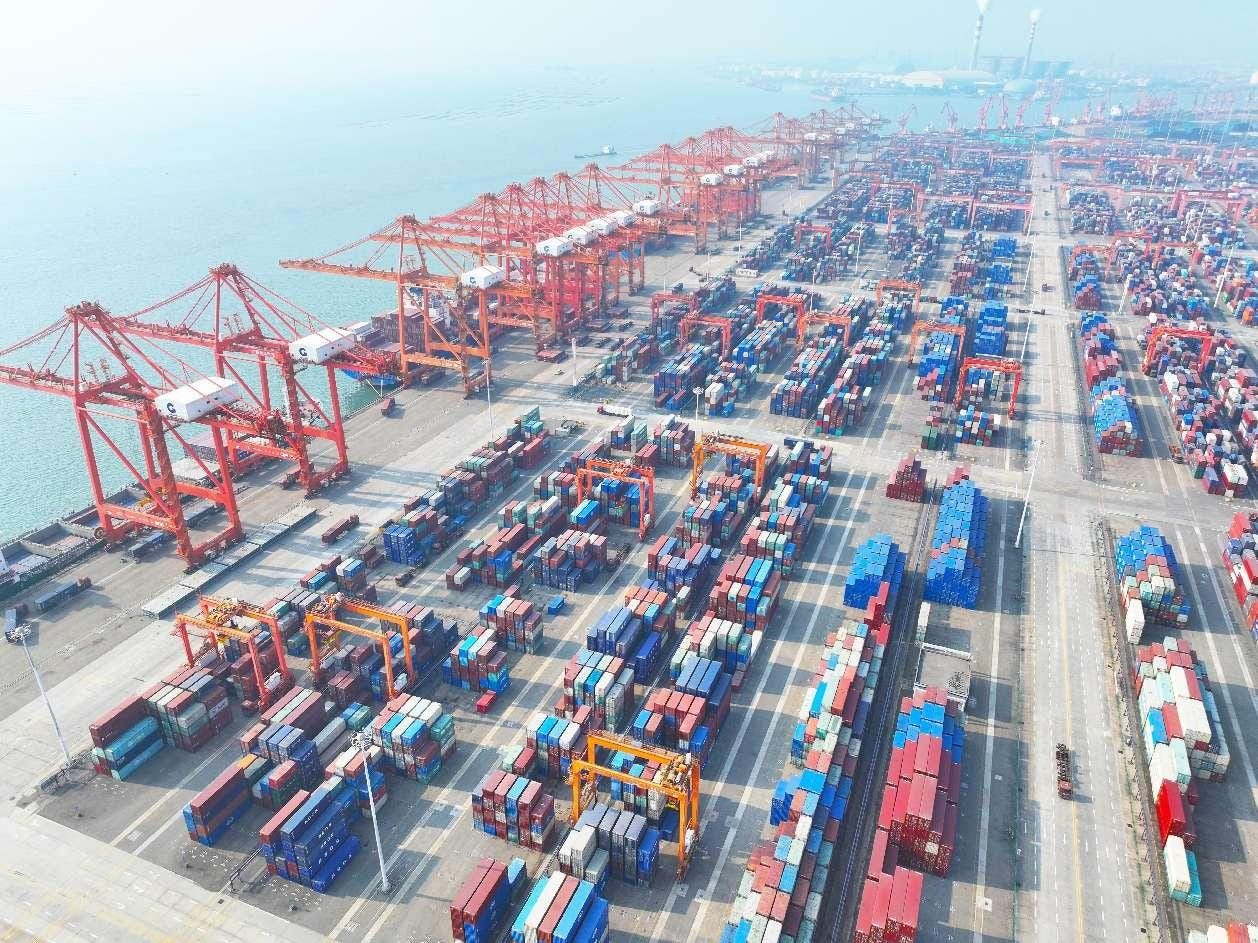
This automated port will keep running.
Power today no longer looks like government.
It looks like construction.
Systems are built, scaled, and locked in without ever passing through public settlement. Platforms expand. Supply chains reconfigure. Capital allocates. Models decide. None of this requires persuasion, consent, or legitimacy in the older sense. It requires only continuity — of funding, computation, compliance, and throughput.
This is the elite human–machine stratum.
It is not defined by intelligence alone, nor by wealth, nor by technical skill. It is defined by insulation. Those inside it experience fewer consequences from the systems they help build. Their errors are amortised. Their failures are absorbed elsewhere. Their optimisation loops close internally.
Legitimacy once disciplined power by forcing elites to govern those affected by their decisions. That discipline has weakened. Power can now build without governing because it no longer needs to convert action into consent. It needs only to remain legible to capital, computation, and risk frameworks that sit upstream of politics.
This is why so much power today feels simultaneously immense and evasive. It acts everywhere but answers nowhere.
The members of this stratum often believe they are pragmatic. They speak in the language of inevitability: efficiency, competitiveness, realism. They do not see themselves as rulers. They see themselves as operators inside systems that “must” work this way. Responsibility dissolves into process.
What has changed is not elite morality, but elite constraint.
Earlier elites were bounded by publics they had to face, narratives they had to sustain, institutions that could still fail visibly. Today’s elite stratum is bounded instead by machine legibility: compliance regimes, balance sheets, metrics, models, and simulations. Social legitimacy has been replaced by system compatibility.
This produces a distinctive political pathology. Power grows more capable and less accountable at the same time. Decisions are made continuously but never decisively. Everyone can see the consequences. No one feels authorised to stop.
The result is not tyranny. It is something quieter and harder to contest: optimisation without settlement.
Those outside this stratum often sense the imbalance but misname it. They reach for populism, conspiracy, moral outrage. None of these land, because the problem is not malevolence. It is insulation. Shouting does not puncture it. Voting barely touches it.
This is why legitimacy no longer binds power, even when formally preserved. Elections occur. Institutions persist. Participation continues. But the most consequential systems — financial, computational, logistical, ecological — move on a different plane.
The elite human–machine stratum does not need to defeat democracy. It only needs to outgrow it.
What replaces this condition is not yet visible. What is visible is its cost: a widening gap between those who build systems and those who live inside their consequences.
This gap is not ideological. It is structural. And it will shape everything that follows.