The Fifth Draft
What happens to a state when its documents lose their scars?

Summary
AI can now generate government papers that are functionally indistinguishable from those produced by experienced officials. This essay asks what is lost when the document arrives without the ordeal of drafting—and what “seriousness” means in a state whose papers no longer carry scars.
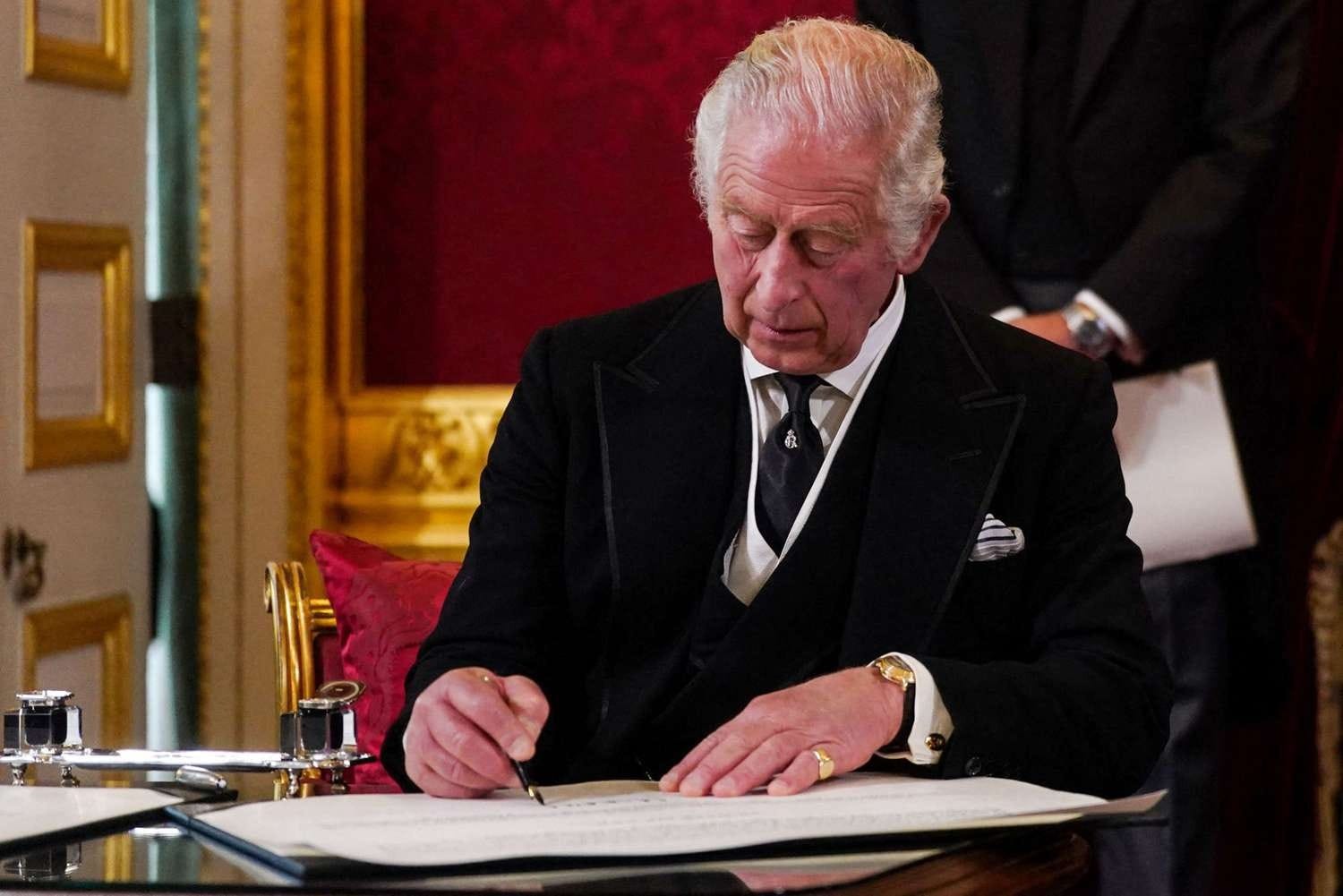
A government paper used to pass through a body before it entered the state.
Someone had to sit with it. Someone had to ruin an afternoon for it. Someone had to carry it from one meeting to another, return with three objections and no answer, move a paragraph down, remove an adjective, restore the adjective, call another agency, wait for a line that would not arrive, and discover, usually too late, that the real problem was not the one named in the first draft.
By the time the paper reached the table, it had not necessarily become true. Government papers are not truth. They are instruments for making action tolerable. But the paper had acquired something that did not appear in the template.
It had acquired weight.
This weight was not literary. No one in a serious administrative state praises a paper because it has style. A good paper is often deliberately plain. It makes no unnecessary claims. It does not plead with the reader. It hides its labour behind an orderly surface. The better the paper, the less it advertises the difficulty of its making.
But people inside institutions can usually tell when a paper has passed through the problem and when it has merely passed through a format.
The difference is not always in the grammar. The grammar may be identical. The headings may be correct. The options may be balanced. The recommendation may sit exactly where a recommendation should sit. Yet one paper feels as if it has met resistance. Another feels as if it has learned the shape of resistance from afar.
This was the function of the fifth draft.
The first draft was usually clever. It had the confidence of someone who still believed the problem had been understood because it had been named. The second draft became longer, because reality had started to object. The third draft became uglier. The fourth draft lost a sentence the writer liked. By the fifth draft, if the institution was fortunate, the paper no longer belonged entirely to the person who began it. It had been marked by other people’s fears, memories, evasions, and injuries. It had absorbed the shape of the room before entering it.
The fifth draft was not only a better arrangement of words.
It was the scar tissue of the first four.
This is what artificial intelligence now interrupts.
The first shocking thing about an AI-generated government paper is not that it is bad. Bad would be easier. Bad would leave the old moral order intact. One could laugh at the phrasing, correct the hallucinations, warn younger officers against laziness, and return to the comforting belief that seriousness still announces itself through effort.
The more disturbing thing is that much of it is good enough.
The paper arrives already dressed for the room. The tone is sober. The caveats are in place. The risks have been placed in their cages. The recommendation is not too aggressive. The uncertainties have been softened without being hidden. It does not sound inspired, but government papers are not meant to sound inspired. It has learned the modesty of power.
There is something almost indecent about this modesty.
Modesty used to be one of the marks left by contact. A sentence became modest because someone had discovered the limits of what could be defended. A claim became narrower because another agency had refused the wider one. A recommendation became more careful because the last version had been wounded by someone who remembered a failure from ten years ago.
Now modesty can be generated.
The paper kneels without having been humbled.
That is the uncanny thing. Not that the machine lies. Humans lie more inventively. Not that the machine hallucinates. Institutions hallucinate too, often with budgets and steering committees. The uncanny thing is that the machine can imitate the outward posture of responsibility without being available for consequence.
It can write the paper.
It cannot be summoned.
This matters because the modern state lives by documents. It does not merely use them. It is made of them. Laws, minutes, submissions, approvals, circulars, tenders, assessments, replies, certificates, permits, forms, forecasts, speeches, talking points: these are not decorations around power. They are the way power becomes durable enough to travel.
A command shouted in a room dies with the room. A document escapes. It moves across desks, systems, agencies, years. It can be cited by people who never met its writer. It can be used to justify a budget, deny an appeal, acquire land, close a loophole, open a school, reject a family, classify a risk, or remember an intention long after the people who held that intention have left.
For this reason, the document was never just output. It was a vessel of institutional memory. It carried not only what had been decided, but what had been survived.
A society that governs through papers therefore depends on a quiet faith: that somewhere behind the document, a person or group of persons has passed through enough of the matter to make the paper answerable. This faith is often betrayed. Many papers are evasions. Many are embalmed ignorance. Many exist because a meeting had to be fed and a superior protected from surprise. Bureaucracies are very good at producing documents that look like thought after thought has gone missing.
Still, the ordeal mattered.
Even a bad ritual can carry a hidden function. The act of drafting forced delay. Delay forced exposure. Exposure allowed embarrassment. A sentence that sounded fine on Monday became indefensible by Wednesday. A number that looked precise became meaningless after a phone call. A clean recommendation began to smell of cowardice once someone asked who would be hurt by it.
The paper was a forcing device. It made evasions visible by making them repeat themselves.
This is why the abolition of drudgery is not a simple blessing. Much bureaucratic labour deserves to die. Whole afternoons have been sacrificed to font sizes, clearance chains, false urgency, and the choreography of appearing aligned before anyone has thought. No humane person should defend this merely because it is old.
But not all friction is waste.
Some friction is initiation.
The junior officer who struggles through the fifth draft is not only learning how to write. The officer is learning what the institution fears. Which facts cannot be used because no one trusts their source. Which phrase will trigger a ministry that believes it has been misrepresented. Which option exists only because nobody dares remove it. How much ambiguity can be carried before it becomes deceit. Whether “stakeholder concerns” means pain, self-interest, class anxiety, political danger, or simply a powerful person’s irritation.
This knowledge does not enter cleanly. It enters through humiliation. Through revision. Through being told that the sentence is wrong, then discovering that the sentence was wrong for reasons no one could put in the comments. Through the slow education of one’s cleverness.
The fifth draft is where cleverness goes to be disciplined.
This is why the machine’s speed is not innocent. It does not merely shorten the time between question and answer. It shortens the distance between ignorance and plausible speech.
That distance used to protect institutions from some forms of cleverness. Not all. The world has always had fluent fools. But fluency still took time. It required enough contact with the material that the writer might accidentally become less foolish along the way. The first draft revealed the vanity of the mind that produced it. The second draft exposed what the first draft had avoided. The third draft began to teach proportion.
Now the machine can produce the fifth draft as a first draft.
But the fifth draft was never only a form.
It was a passage.
When the form appears without the passage, the institution loses one of its quiet ways of knowing whether anyone has actually passed through the problem.
This is not a small loss.
Modern administrative societies have long used writing as a test of seriousness. The person who could produce the paper had usually encountered the matter. Not always, but often enough for the signal to hold. Writing was expensive. Synthesis took time. A paper required a certain submission to sequence: background before issue, issue before options, options before recommendation, recommendation before approval. The mind had to arrange itself in public.
This made writing moral as well as technical. The paper was not merely evidence that the writer could think. It was evidence that the writer had accepted a temporary discipline. The writer had allowed the problem to reorganise attention.
AI changes the evidentiary status of the paper.
The paper can no longer prove passage.
It may still be useful. It may be more useful than the old paper. It may save hours of dead labour. It may allow a small team to do what once required a branch. It may widen access to forms of writing that were previously monopolised by the already-trained. All of this is true. One should not confuse reverence for ordeal with justice. Many people were excluded because they did not know how to perform the old forms. Some of those forms deserved to be broken.
But once they are broken, something else must carry the burden of seriousness.
The state still needs to know who has understood.
The state still needs to know who can be trusted.
The state still needs to know where responsibility has entered.
This is where the signature returns.
A signature is one of the last magical acts inside modern government. We pretend it is administrative because modern people are embarrassed by magic. A name at the end of a submission. A click in a system. An approval recorded in a workflow. A small gesture, almost nothing compared with the machinery beneath it.
Yet before the signature, the paper remains draft, circulation, possibility. After the signature, something has crossed over. Money may move. A rule may bind. A family may be denied. A road may be built. A school may be merged. A person may be placed into a category from which escape will require years.
The signature is where language becomes consequence.
Children practise signatures before they have anything to sign because they sense this before they understand it. The signature is the self made transferable. It allows a name to stand where the body is absent. The adult world is full of such marks: contracts, wills, judgments, apologies, approvals, resignations. We live under the rule of names that have learned to leave the hand.
The machine can write everything above the name.
It cannot give the name.
So it waits.
This is the new administrative scene: a document produced by no one, waiting for someone.
That someone may be a junior officer who asked the machine for a first cut and received not a first cut but an imitation of maturity. It may be a director whose calendar gives fifteen minutes to a matter that requires a season of thought. It may be a minister who sees only the final page. It may be a whole state, borrowing the calm of its systems to move through questions it has not learned how to suffer.
The human supplies the name.
The human supplies the exposure.
This is why the future of AI in government cannot be understood only as a question of productivity. Productivity asks how much faster the paper can be produced. The deeper question asks what kind of passage the paper must still undergo before it deserves to be signed.
A foolish institution will answer this by preserving old pain in new forms. It will make officers perform ordeal after the ordeal has lost its function. It will demand unnecessary revisions, redundant clearances, theatrical human involvement, and manual labour as proof of virtue. This will be called rigour. It will mostly be fear.
A clever but dangerous institution will go the other way. It will treat the generated paper as essentially equivalent to the worked-through paper, provided the facts are checked and the tone is right. It will congratulate itself on efficiency. It will reduce the labour of drafting without replacing the apprenticeship hidden inside drafting. It will produce more papers, faster, with fewer scars.
This will feel like competence.
For a time, it may even be competence.
The danger is not a state that stops functioning. The danger is a state that continues to function while becoming less woundable by its own work. It will have dashboards, papers, models, service journeys, scenarios, recommendations, and replies. It will remain busy. It may improve many things. But fewer of its documents will carry the marks of anyone having been changed by the matter at hand.
An unwounded state is not a weak state.
It may be very strong.
That is the problem.
A weak state cannot do what it intends. An unwounded state can do many things without registering what they cost. It is protected from friction by its own competence. Its documents circulate with fewer hesitations. Its answers arrive before shame has had time to form. It becomes harder to tell the difference between responsiveness and evasion, between clarity and premature closure, between a system that has understood and a system that has learned to sound as if understanding has occurred.
The machine does not create this danger. It accelerates an old temptation.
Every competent state wants the world to become answer-shaped. Every bureaucracy wants problems to arrive in forms that can be routed, staffed, cleared, and closed. Every project state, especially, is tempted to believe that what can be made into a programme has been made governable.
AI strengthens this temptation by giving the state more answer-shaped things than it has ever had before.
More summaries. More options. More drafts. More scenarios. More maps. More classifications. More warnings. More replies. More ways to convert ambiguity into something that can sit inside a workflow.
But not every wound wants to become a workflow.
Aging is not only a healthcare demand. Fertility is not only a demographic variable. Class anxiety is not only a transfers problem. Care is not only a manpower constraint. The exhaustion of educated people is not only a productivity issue. Chronic illness is not only a cost curve. The desire for beauty after success is not only a lifestyle preference.
These things can be written about by the machine. They can be modelled, summarised, segmented, and placed in a deck. But they are not understood merely because they have become administratively legible.
Understanding requires passage.
A state that forgets this will mistake generated familiarity for contact. It will believe it knows because it has language. It will believe it has listened because the concerns have been summarised. It will believe it has deliberated because the options have been balanced. It will believe it has borne the matter because the paper is ready to sign.
This is where the fifth draft must be reinvented.
Not as nostalgia. Not as a defence of bureaucratic suffering. Not as a demand that humans continue doing dead labour so institutions can feel morally safe. The old fifth draft was often cruel, slow, hierarchical, and wasteful. It disciplined cleverness, but it also rewarded endurance, conformity, and the ability to survive pointless abrasion.
We should not restore the old ordeal.
We need a new passage.
If the machine can produce the fifth draft as a first draft, then the human work must move elsewhere. It must move into the testing of consequence. Into asking what the paper has made too easy to say. Into finding the person missing from the model. Into naming the injury hidden inside the neutral term. Into refusing the recommendation that is plausible but cowardly. Into knowing when an answer has arrived too soon.
The question can no longer be: who wrote this?
It must be: who has been changed enough by the problem to sign it?
That is a harder test. It cannot be automated by making the human type more words. It requires institutions to thicken the moment before approval. Not with more process, but with more exposure.
A good AI-era paper may need fewer drafts and more witnesses.
It may need someone to say, plainly, what would have to be true for this recommendation to be wrong. It may need a named dissenter, not buried in annexes. It may need the affected citizen to appear not as a segment but as a pressure on the language. It may need the approving officer to state what cost is being accepted, not merely what benefit is being sought. It may need the meeting to become less like an information exchange and more like a court in which responsibility is assigned.
Not every paper deserves this. Most papers do not. Administration cannot become permanent theatre. But the more consequential the decision, the less acceptable it becomes for the paper to arrive without scars.
The scars need not come from drafting.
But they must come from somewhere.
This is the post-labour problem inside the cognitive state. Not unemployment first. Not even obsolescence first. The first wound is stranger: the old signs of seriousness become easier to imitate just as the need for seriousness grows.
The machine can produce the artefact.
It cannot undergo the formation.
It cannot be embarrassed into wisdom. It cannot remember that its first answer was vain. It cannot feel the silence in a room after a sentence lands badly. It cannot carry shame on behalf of a state. It cannot become less clever because reality has hurt it.
Only humans can do that.
This is not a flattering conclusion. It does not say that humans are special because they are creative, soulful, empathetic, or wise. Often they are none of these things. The human advantage is darker and more modest.
Humans can be wounded by responsibility.
That wound is not incidental to government. It is one of the ways government remains attached to reality.
The old paper passed through a body. The new paper may not. It may arrive clean, fluent, modest, and complete, with no afternoon ruined, no sentence hated, no first draft humiliated into truth. It may look like the fifth draft. It may even be better than the fifth draft.
But before it enters the state, someone must still ask what it has not passed through.
Someone must ask where the scar is.
And if there is no scar, someone must decide whether the paper is ready for the world, or only ready for the room.
You reminded me of something I heard long ago about Japanese decision making, which I just fact-checked :)
The process of floating a proposal is called Ringisho. Peers are expected to sign off on it by applying their Hanko (personal seal). The degree to which their seal varies from vertical is the degree to which they disagree with it.
What I found particularly cool about it is that proposals that are controversial or stale look the part: they get all thumbed up and worn.
Here's how Wikipedia describes the process:
The process of "ringi decision-making" is conducted through a document called a ringisho (稟議書) The ringisho is created and circulated by the individual who created the idea. As the ringisho reaches a peer for review, the peer places their "personal seal (hanko) right side up" to agree, "upside down" to disagree, and sideways to indicate being undecided. Once all peers have reviewed the ringisho the peers' manager reviews the ringisho and places their hanko on it. The upper level manager's decision is final and the ringisho is sent back to the originator who either initiates the idea or re-evaluates, based on the "hanko" of the upper level manager.