The Fracture Dividend
Why Southeast Asia specialized in not becoming East Asia

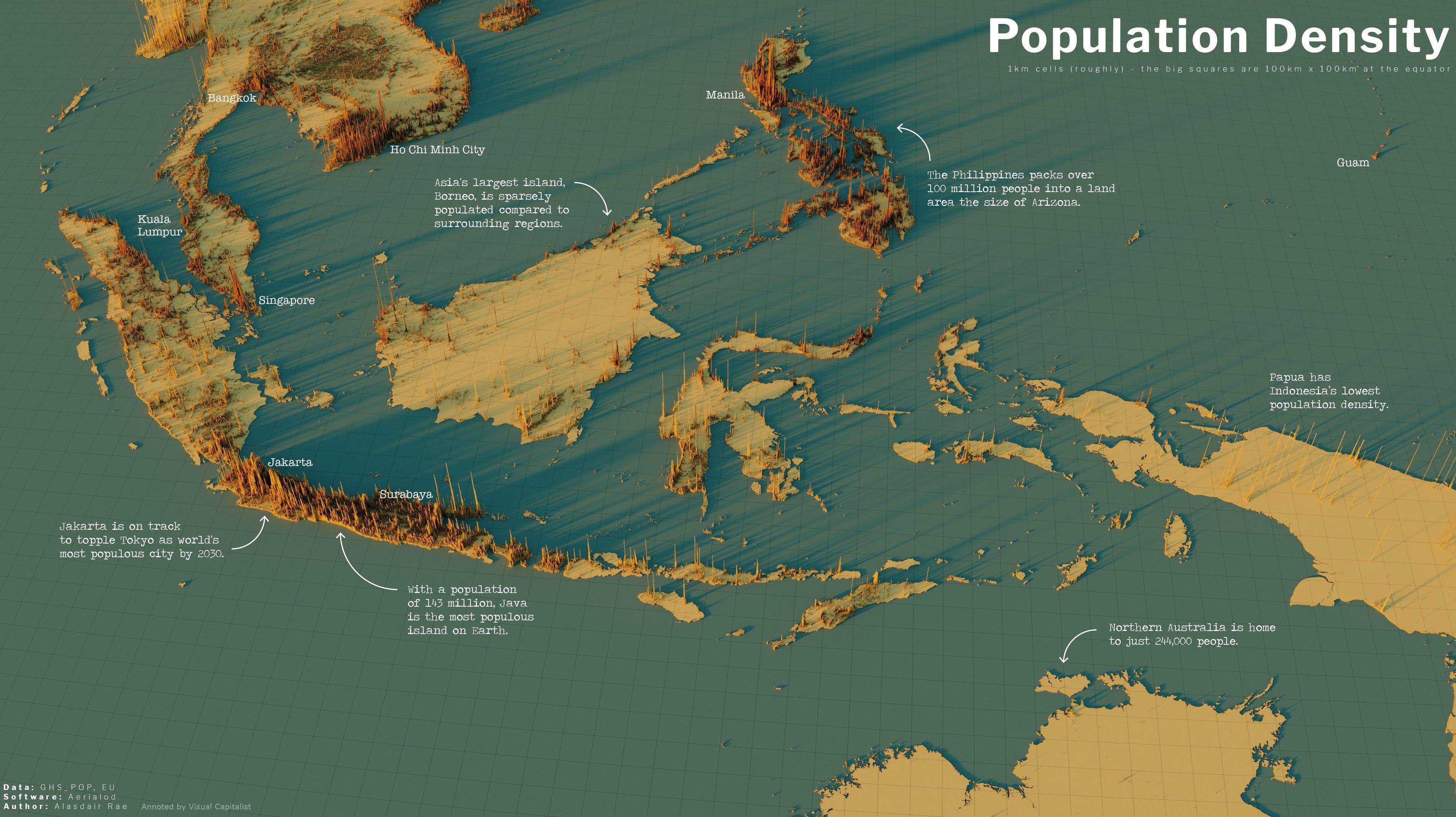
Joe Studwell was right in the wrong way.
East Asia did get rich by doing a few brutal things well: breaking old agrarian power, disciplining capital, and forcing firms to learn. Southeast Asia, by and large, did not. Thirteen years later, though, the really interesting question is no longer why Southeast Asia failed the Northeast Asian exam. It is why so much of Southeast Asia never wanted to sit for it.
That is the polite mistake in most writing on the region. It treats Southeast Asia as failed East Asia: not enough reform, not enough state capacity, not enough industrial discipline, not enough will. The region then looks like a classroom of incomplete Koreas and Taiwans.
But building Korea or Taiwan was not a matter of policy cleverness alone. It meant finishing the state in a very specific way. It meant breaking old landed and provincial power, bending banks to national purpose, subordinating local notables, forcing capital into dangerous technological climbs, and making whole classes live inside a new industrial discipline whether they liked it or not.
Much of Southeast Asia chose another bargain.
Not no order.
Not failed order.
A different order.
Enough state to tax, police, concession, broker, invite investors, repress selectively, and keep the capital city glowing. Not enough state — or not the kind of state — to smash courts, dynasties, military vetoes, provincial barons, old property bargains, and layered sovereignties in the name of national industrial command.
East Asia used industry to reorder society. Southeast Asia more often used growth to avoid having to do that.
That is why the region makes more sense once you stop asking why it did not become somewhere else and start asking what its ruling bargains were actually built to preserve.
Take Malaysia.
Malaysia did industrialize. Penang was real. Electronics exports were real. Intel and AMD and the rest were real. But that is precisely why the case is so revealing. The question is not whether Malaysia got factories. It did. The question is what kind of political settlement those factories allowed.
Korea used industry as a weapon against its own old order. Banks were bent to national purpose. Firms were forced to export, learn, and climb. Failure was punished. The social pain was immense, but the direction was clear: build domestic industrial power.
Malaysia found a gentler and safer bargain. It welcomed world-class manufacturing in, let foreign firms do the technologically dangerous climbing, and built prosperity around that. Domestic elites could remain comfortable in property, plantations, finance, public contracts, state-linked companies, and the management of an ethnic compact. Malaysia got manufacturing without having to create Korean-style industrial captains or wage a Korean-style war inside the ruling bloc. It got Penang. It did not get Samsung.
Thailand tells the same truth more theatrically.
Thailand is usually described as unstable, coup-prone, polarized, trapped. All true. All shallow. The deeper truth is that Thailand is a court society inside a factory economy. The country built an industrial base, but not one strong enough to dissolve the court that governed it. So the obvious stays obvious and also stays immovable. Everyone can see what the next step should be. Almost nobody can take it. The old order would rather halt than yield. That is not a technical problem. It is a political design.
The Philippines found an even softer solution. Instead of forcing a fight over land, industry, and capital, it exported workers. Remittances did politically what factories would have done economically: brought in foreign exchange, stabilized households, eased pressure on the state, and postponed the deeper war over domestic transformation. That is not no model. It is a model. A society can live a very long time by exporting people instead of remaking itself.
Indonesia is the most revealing case because it is the one country large enough to imagine something more.
Indonesia is not a platform in the Malaysian sense, nor merely an escape valve in the Philippine sense. It is the region’s unfinished power: continental scale distributed across islands, democratic noise, military residue, Islamic breadth, mineral leverage, and a constant ambition to turn size into destiny. But even there, the Southeast Asian bargain persists. Nickel may yet make Indonesia a green furnace of the world. The question is whether it becomes a power or merely a larger mine with better rhetoric. Indonesia can bargain magnificently. It has not yet shown that it can discipline itself the way Korea once did.
Vietnam, of course, is the awkward exception. But it is an exception that proves the rule. Vietnam escaped part of the Southeast Asian trap precisely by being less Southeast Asian in state form: harder, more centralized, more willing to use land, labour, and party discipline as instruments of national transformation. It looks like escape because it behaved more like East Asia. Which is another way of saying that the regional pattern was real all along.
So the problem with both developmental optimists and many critics is that they still leave Southeast Asia trapped in the language of deficiency. They describe what the region did not become. They do not quite say what it became instead.
What it became was a region of fractured lands and fractured seas.
The mainland is broken by river basins, uplands, borderlands, insurgencies, refugee flows, military hinterlands, and older court geographies that never really died. The maritime world is broken into islands, straits, ports, city-states, offshore jurisdictions, half-integrated peripheries, and capitals that speak more easily to distant markets than to their own interiors.
In such a geography, the most successful ruling forms are often not the hardest states.
They are the best brokers.
That is why Southeast Asia generates so many niches. Port cities, border metros, plantation belts, migrant corridors, special zones, mining enclaves, offshore shelters, semi-autonomous peripheries, and those grotesque telephone scam compounds that are, in their own ugly way, one of the clearest truths about the region. They are the pornographic version of a broader logic: sovereignty rented out by the room, law made selective, infrastructure turned into franchise, bodies turned into inputs. The compounds are not the region’s essence. They are one of its obscene social forms.
And Southeast Asia is, for better and worse, one of the world’s great laboratories of social form.
That is where the real tension lies: between Nanyang and Nusantara.
Nanyang is not just “the Chinese diaspora.” That phrase is too static. Nanyang is the southern Chinese outside: the world of ports, schools, merchant houses, family strategies, legal shelters, and partial Chinese worlds beyond China proper. It becomes especially alive when China is strong. A weak China sends migrants, exiles, survivors. A strong China sends something else as well: pressure, money, institutions, expectations, cautious wealth, children in need of schools, and people who do not want to leave China so much as live at a slight angle to it.
Nusantara is something different. Not a neat ethnic bloc, and not a slogan to be taken too literally, but the older maritime Malay-Indonesian world of ports, courts, islands, Islam, language, kinship, and overlapping authority — broader, more fluid, and more improvisational than the nation-state map suggests. “Malayness” in this history was often more status, culture, courtly association, and political instrument than rigid blood category; the region’s identities and centers shifted repeatedly with sultanates, courts, colonial classifications, and new state projects.
These two worlds have overlapped before. Chinese merchant settlements, kongsi formations, and southern commercial communities made bargains with local sultans, rajas, and Siamese lords rather than simply replacing them. Authority was layered. Commerce was real. So was court ritual. The point is not that the past returns intact. It never does. The point is that maritime Southeast Asia has older grammars of coexistence, brokerage, and partial sovereignty than modern strategic writing usually admits.
Which means the future may look less like “China versus Southeast Asia” and more like new bargains between Nanyang and Nusantara under modern conditions.
Not clan halls, but family offices.
Not tribute ports, but industrial parks and education corridors.
Not royal letters, but permits, developers, halal finance, property trusts, and negotiated jurisdictions.
Not old merchant republics, but new Chinese-adjacent commercial worlds nesting beside Malay courts, Indonesian scale, and Singaporean legal order.
This is why Johor matters.
Johor is not just “spillover” from Singapore. That word is too vague. What is emerging there is a much more precise form. Singapore holds the certainty: contracts, courts, hospital credibility, school prestige, financial seriousness, administrative trust. Johor holds the space: land, warehouses, condos, factories, service belts, and the possibility of an ordinary middle life at a cost Singapore cannot easily offer. Put the two together and you get a two-part organism. One side stores certainty. The other side stores expansion and everyday life.
That is not merely an economic arrangement. It is a regional form.
And it explains Singapore’s peculiar position in Southeast Asia. Singapore is not the opposite of the region’s fractured order. It is the hard membrane that makes that fractured order usable. It profits from being the place where regional ambiguity is translated into global legibility. Chinese enough to receive. Southeast Asian enough to understand. State-like enough to reassure. Small enough not to terrify. Enough state capacity to hub the region. Not enough hinterland to swallow it.
It is the hard edge of a soft world.
This is also why ASEAN, for all the jokes, will probably survive in some form. Not because it is marching toward Europe. Not because it governs a coherent bloc moving steadily toward union. But because a region built on negotiated incompletion benefits from etiquette. ASEAN’s real achievement was never convergence. It was choreography. It allowed a geography of courts, corridors, islands, generals, traders, developers, migrants, and ideologues to behave like a region long enough to trade, talk, and not explode too often.
That still matters.
It just is not the engine of history here.
The engine is underneath: a region that became very good at holding what larger systems cannot comfortably house inside themselves.
Chinese overflow.
American pressure.
Mineral hunger.
Migrant labour.
Religious revival.
Border capitalism.
Criminal innovation.
Malay recomposition.
Archipelagic ambition.
That is why Southeast Asia keeps getting more important without quite becoming harder.
So what will stun in 2036?
Not that Southeast Asia finally became East Asia. That would be too neat.
Not that ASEAN vanished. That would be too easy.
Not even that China mattered more. Of course it will.
The startling thing may be that Southeast Asia became more central precisely by remaining unfinished.
That its elites were not merely asleep or incompetent.
That weak sovereignty was not only incapacity.
That it was also, in many places, a method.
A way of keeping the court alive.
A way of keeping the door open.
A way of letting outside systems pay for inside compromise.
A way of monetizing fracture rather than curing it.
East Asia seized the heights.
Southeast Asia learned to live — and profit — in the fractures.
The danger is obvious. A region organized around profitable incompletion can become a playground for stronger powers, stranger money, predatory niches, and endless brokerage. It can host everything and author nothing. It can become rich in fragments and thin in direction.
But there is another possibility too.
Fractured lands and fractured seas are also where new social forms appear first.
Not in finished empires.
Not in perfectly consolidated nation-states.
In archipelagos, border belts, ports, hybrid courts, and half-made cities.
Southeast Asia is not the region that failed to become somewhere else.
It is the region where the future keeps arriving in pieces.
h/t Pietro Masina’s articles that provided the seed for this essay