The Future Became Mandatory
will desire take the return train?

On Friday evenings, some of my former students leave Beijing to become young.
They work in the capital now. Good jobs, serious offices, the kind of lives that look successful from the outside. But when the week ends, they take the high-speed rail to Xi’an to party.
*this is a casual essay-let triggered by re-reading decade-old Liu Cixin Three-Body-Problem interviews, a now censored WeChat note how the number of youth in Beijing has halved since the Olympics or something like that, can’t verify as the note is gone… plus re-reading a self-congratulatory 2019 May Fourth centennial note which I’ve reposted. some street music from my last trip to Shanghai.
This is not because Beijing is irrelevant. It is because Beijing has become too good at being Beijing: too political, too expensive, too disciplined, too watched, too serious.
The capital kept command and lost play.
The youth economy did not disappear. It got on the train.
That small scene says something larger about China after Xi, and perhaps about every project state once it has disciplined itself too well. The usual Western question is whether China will liberalize. That is too narrow. It assumes that politics is always the first way a society breathes again.
Sometimes it is not.
Sometimes the first thing to return is not freedom, but desire.
Not democracy. Not revolution. Not manifestos.
Play. Waste. Nightlife. Romance. Costume. Comedy. Religion. Weird art. Bad music. Good food. Road trips. City pride. Fantasy. Flirtation. The right to make a slightly stupid decision and not have it immediately folded into the national mission.
China may not first need a new ideology.
It may need somewhere to be young.
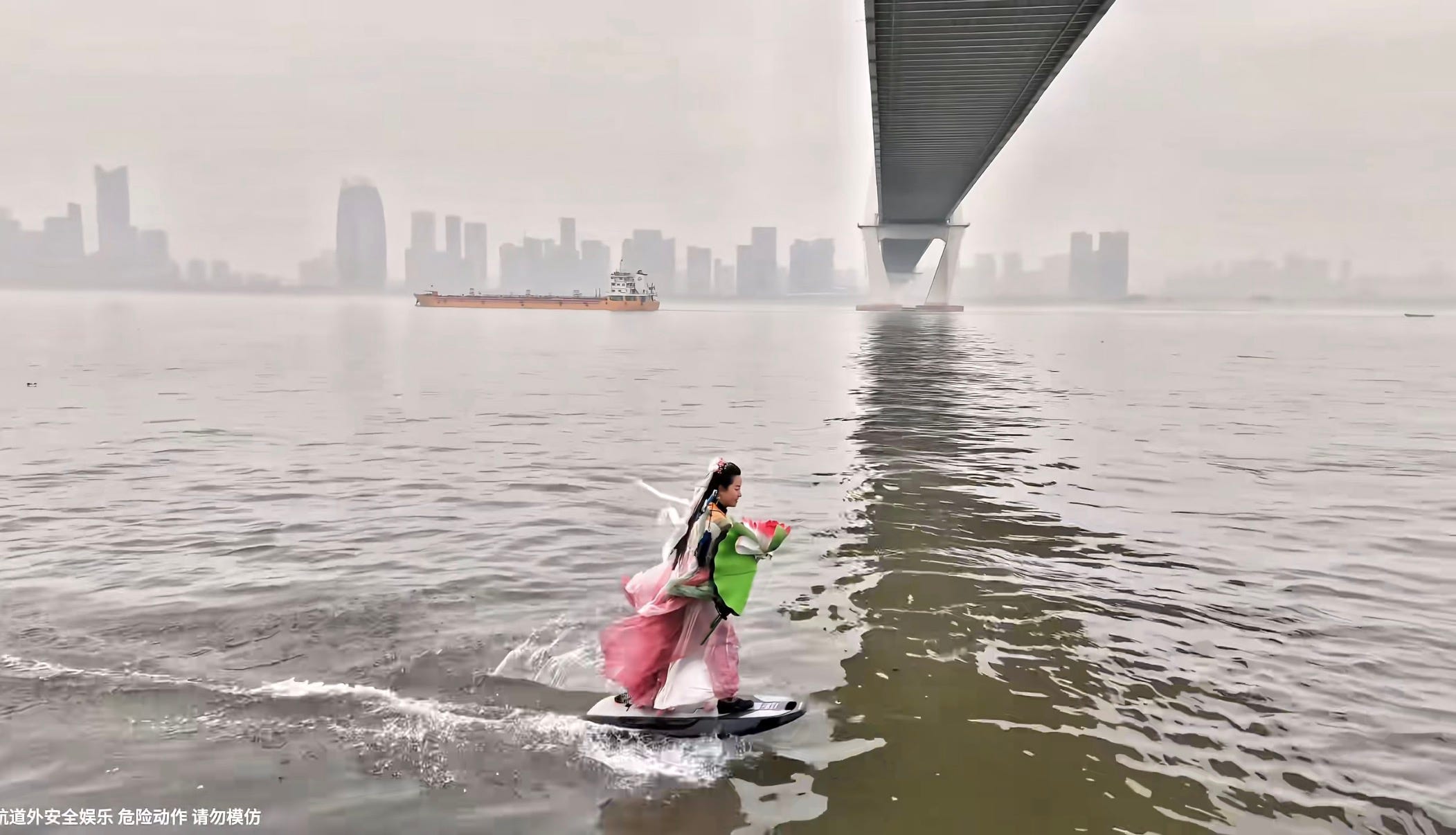
Not Mark Zuckerberg on a hydrofoil, but kinda the same spirit.
For a while, China had that feeling. Not everywhere, not equally, not innocently. But there was a golden-age energy before Xi fully re-commanded the system. It was not liberal in the Western sense, and it was never as free as outsiders wanted it to be. But it was alive.
You could feel it in the cities, in the platforms, in the private firms, in the sudden arrogance of Chinese technology, in the strange joy of being late to modernity and then overtaking parts of it. You could feel it in science fiction, where Chinese readers stopped living only inside the compressed present and began looking outward into cosmic time. Liu Cixin did not merely write stories about aliens and deterrence. He captured a new psychological weather: a China whose future was no longer just national, but planetary, even galactic.
That mattered.
For much of modern Chinese history, the future had arrived from elsewhere. It came as humiliation, invasion, science, industry, Marxism, finance, the West, Japan, America. It was something to be studied, copied, resisted, caught up with. But by the 2010s, something had changed. China was no longer simply looking up at the world. It was beginning to imagine itself as a world-historical protagonist.
The May Fourth centenary captured the ideological version of this turn. A century earlier, China had reached for “Mr. Science” and “Mr. Democracy” under conditions of weakness and humiliation. By 2019, the mood had reversed. The West looked exhausted. Liberal democracy looked brittle. America looked angry. Europe looked old. China looked at the old teachers and began to think: perhaps you are the ones in crisis now.
That was the golden-age feeling.
Not innocence. Not softness. Not freedom exactly.
Futurity.
A society felt itself moving from follower to author.
Xi did not invent that energy. He captured it.
That is the hinge.
Xi did not extinguish China’s golden age. He nationalized it.
What had been broad, messy, commercial, vulgar, playful, experimental, and sometimes weird was folded back into mission. National rejuvenation. Security. Self-reliance. Party leadership. Correct history. Correct culture. Correct technology. Correct youth.
The future did not disappear.
It became mandatory.
This is the great irony of the industrial party.
The CCP transformed the material base with astonishing force. It built the stack: factories, grids, batteries, trains, ports, solar farms, urban systems, universities, platforms, laboratories, payment rails, industrial parks. It took a country that had once been the workshop of others and turned it into a machine civilization with its own energy, standards, infrastructure, and increasingly its own sense of destiny.
The industrial party won the base.
Then it overreached into the superstructure.
It could command factories. It could command grids. It could command banks, land, local officials, state firms, universities, and industrial policy. It could discipline corruption. It could build high-speed rail through mountains and electrify cities at a speed that made the old rich world look ceremonial.
But then it tried to command the weather.
Culture. Desire. Youth. Imagination. Historical memory. The tone of the internet. The acceptable shape of ambition. The correct relation between private success and national rejuvenation. The emotional life of the future.
That is where the trouble begins.
Meaning does not behave like steel.
Desire does not follow procurement schedules.
You can build a battery plant by mandate. You cannot make young people feel alive by directive. You can clean a city, discipline a bureaucracy, regulate a platform, and harden a border. You can make a society formidable. But you cannot indefinitely postpone its need to breathe.
A mandatory future can still build magnificent things. In fact, it may build them better than a loose one. It can pour concrete, marshal capital, compress adoption cycles, coordinate ministries, and make older democracies look like committee meetings trapped inside lawsuits.
But mandatory futures have a problem.
They are bad at play.
Beijing is the purest version of the problem. It remains the command city: ministries, universities, think tanks, security organs, state firms, elite institutions, political gravity. It is still where power concentrates. But it is less obviously where young life thickens.
This is not just about housing, though housing matters. It is not just about hukou, though hukou matters. It is not just about opportunity moving to Shenzhen, Hangzhou, Suzhou, Chengdu, Xi’an, and elsewhere, though that matters too.
It is about mood.
Beijing did not only price young people out.
It disciplined them out.
A city can remain powerful while losing the conditions that let young people become adults inside it. It can still host the ministries while outsourcing desire to the weekend rail network.
That is why the Xi’an anecdote matters. High-speed rail is not only infrastructure. It is emotional geography. It does not merely move workers, tourists, and goods. It lets young people separate the city where they are useful from the city where they feel alive.
The youth economy did not disappear.
It got on the train.
This pattern is not uniquely Chinese.
Project states always ask people to postpone themselves.
Postwar Japan asked people to postpone themselves for reconstruction, export discipline, company loyalty, and national ascent. When the bubble burst, Japan did not become politically wild. Desire turned inward, aesthetic, subcultural, meticulous, lonely, strange, beautiful. The project weakened; culture thickened.
KMT Taiwan asked people to postpone themselves for anti-communist survival, Chinese nationalism, developmental order, and party-state discipline. When that system loosened, desire became civic, linguistic, local, democratic, Taiwanese. The return was not only consumption. It became a public self.
Lee-era Singapore asked people to postpone themselves for survival, housing, education, cleanliness, order, growth, and the national family. The project never fully ended, but its afterlife is everywhere: elite exit, café cosmopolitanism, arts anxiety, lifestyle management, controlled looseness, and the constant effort to make success feel inhabitable rather than merely efficient.
Xi’s China is larger, harder, and more consequential than all of these. But the pattern is familiar.
The project state can discipline a society for decades. It can make delay meaningful. It can turn private sacrifice into national ascent. It can say: study now, build now, endure now, be serious now, suppress yourself now, because the nation is not finished.
The project state is powerful while the project is alive.
But desire does not vanish. It waits. It migrates. It disguises itself. It becomes culture, travel, nightlife, religion, games, fashion, fantasy, romance, startup ambition, overseas study, historical cosplay, temple tourism, local food cults, and jokes that only friends understand.
Inside China, desire moves sideways.
To Xi’an, Chengdu, Changsha, Chongqing. To places where people can still waste time. To cities where the state is present but the air is less official. To historical sites and night markets, to Hanfu studios and fantasy dramas, to temples and music festivals, to tourist towns where everything is organized and yet people still feel temporarily released.
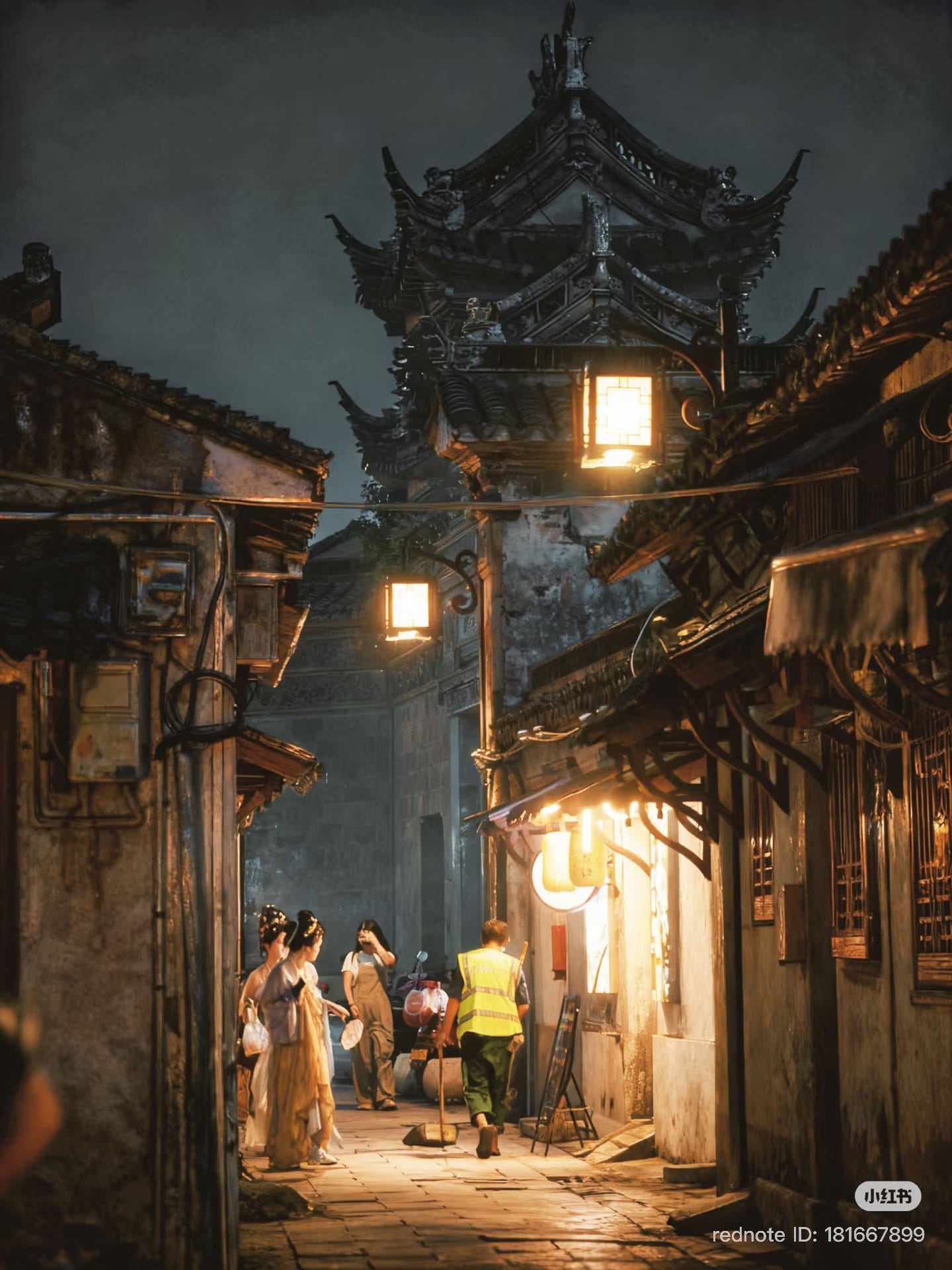
Outside China, desire becomes even more interesting.
It prototypes alternative Chinas.
Not one China-in-exile. That is too simple. Many Chinas in rehearsal.
A Hong Kong Chinese memory of law, finance, protest, shopping, and disappearance. A Taiwan Chinese democratic modernity, carrying both argument and tenderness. A Singaporean Chinese pragmatism, overmanaged but still multilingual, Nanyang, commercial, and useful. A Malaysian Chinese merchant realism. A Thai Chinese hybridity. A Vancouver Chinese, a Sydney Chinese, a London Chinese, a San Francisco Chinese, a Tokyo Chinese, a Dubai Chinese. Crypto Chinese. Christian Chinese. Founder Chinese. Artist Chinese. Family-office Chinese. AI Chinese. Anime Chinese. Republic-of-letters Chinese. Chinese who left and are angry. Chinese who left and are relieved. Chinese who left and still want to go back. Chinese who dream of free Chinese republics but disagree violently on what freedom would mean.
These are not footnotes to the mainland story.
They are rehearsal spaces.
Once futurity is nationalized, desire goes sideways, underground, or offshore.
That does not mean these overseas pools will simply return after Xi. Some will not. Some will have built lives elsewhere. Some will distrust the mainland more with every passing year. Some will return with capital but not with love. Some will return as tourists, investors, teachers, founders, or ghosts.
But enough may return to matter.
A post-Xi thaw, if it comes, will not meet a blank society. It will meet a vast Chinese world that has spent years rehearsing other ways to be Chinese.
That is why “liberalization” is too small a word. It turns the question into institutional reform and party tolerance. Those will matter. But the more immediate question may be affective:
Can China metabolize the desire it postponed?
Can it let young people be unserious without treating unseriousness as decay?
Can it let cities become alive without immediately correcting them?
Can it permit play that is not just consumption, culture that is not just heritage, pride that is not just nationalism, and ambition that is not just service to the project?
Can it allow a golden age without nationalizing it again?
This is where the European analogy is useful, though only if handled loosely. History does not move cleanly from Baroque to Enlightenment to Romanticism, thesis to antithesis to synthesis. But there is a recurring rhythm. Periods of hard rationalization, discipline, and official order often produce affective counter-waves. After reason, sentiment. After command, excess. After system, soul. After the project, play.
China may be approaching its own version of this problem.
Not because the machine is failing.
Because the machine is succeeding.
A failed project state produces anger. A successful one produces a more delicate problem: what comes after success has disciplined everyone too well?

The answer is not necessarily freedom. Desire can return badly. It can become nationalism, cults, misogyny, finance bubbles, luxury decadence, spiritual grift, revenge, vulgarity, and political hysteria. A Baroque is not always healthy. Sometimes it makes cathedrals. Sometimes it makes monsters.
But it will return.
A society cannot live indefinitely as an exam.
The project state can build a nation, but it cannot indefinitely postpone the need to live.
That is the great question after Xi.
Not whether China becomes Western. It will not.
Not whether the party disappears. It will not.
Not whether China stops being serious. It cannot.
The question is whether the Chinese future can become playful again without falling apart.
Because China’s golden age was not extinguished. It was interrupted, captured, disciplined, and routed. The future kept advancing, but it lost some of its looseness. The stack rose. The grids thickened. The trains ran faster. The cities electrified. The factories learned. The labs climbed. The young left Beijing on weekends.
And somewhere, in Xi’an or Chengdu or Singapore or Tokyo or Silicon Valley or Shenzhen or a private chat group or a fantasy game or a temple courtyard or an overseas founder’s office, another China kept rehearsing.
The future became mandatory.
But desire is patient.
It waits for the train.
Thank you far making me understand in the deeper parts of myself; my soul feels alive reading this and getting a glimpse of your wonderful culture!
Beautiful.